Does Expensive Toothpaste Work Better? | Dentist Stanmore
Is expensive toothpaste actually better than a £2 tube? Discover what really matters when choosing toothpaste, including fluoride, whitening, sensitivity, charcoal and specialist formulas.
You only came in for toothpaste.
Simple.
Then you reach the shelf.
🪥 Whitening
✨ Advanced whitening
🦷 Enamel repair
🥶 Sensitive
🩸 Gum care
⚫ Charcoal
🌿 Natural
💎 Premium
🔬 “Advanced technology”
😁 Stain removal
🛡️ Complete protection
One tube costs around £2.
Another costs £6.
Then you spot a premium toothpaste costing £10, £12 or even more.
And suddenly you’re wondering:
“Am I damaging my teeth by buying the cheap one?”
Or, perhaps more importantly:
“Does expensive toothpaste actually work better?”
The reassuring answer is that a higher price doesn’t automatically mean better protection for your teeth.
For most adults, one of the most important things to check isn’t the price on the front.
It’s a much smaller number printed on the packaging:
🦷 The fluoride concentration.
Let’s explain.
Toothpaste prices can vary enormously.
Premium products may contain:
✨ Specialist ingredients
🧪 Different formulations
🥶 Desensitising ingredients
😁 Stain-removing ingredients
🌿 Unusual flavours or botanical ingredients
📦 Premium packaging
💎 Branding and marketing
Some specialist formulations may genuinely be useful for particular dental problems.
But that does not mean every person needs an expensive toothpaste.
For everyday prevention of tooth decay, the first question should usually be:
Does it contain the appropriate amount of fluoride?
Not:
Does the tube look expensive?
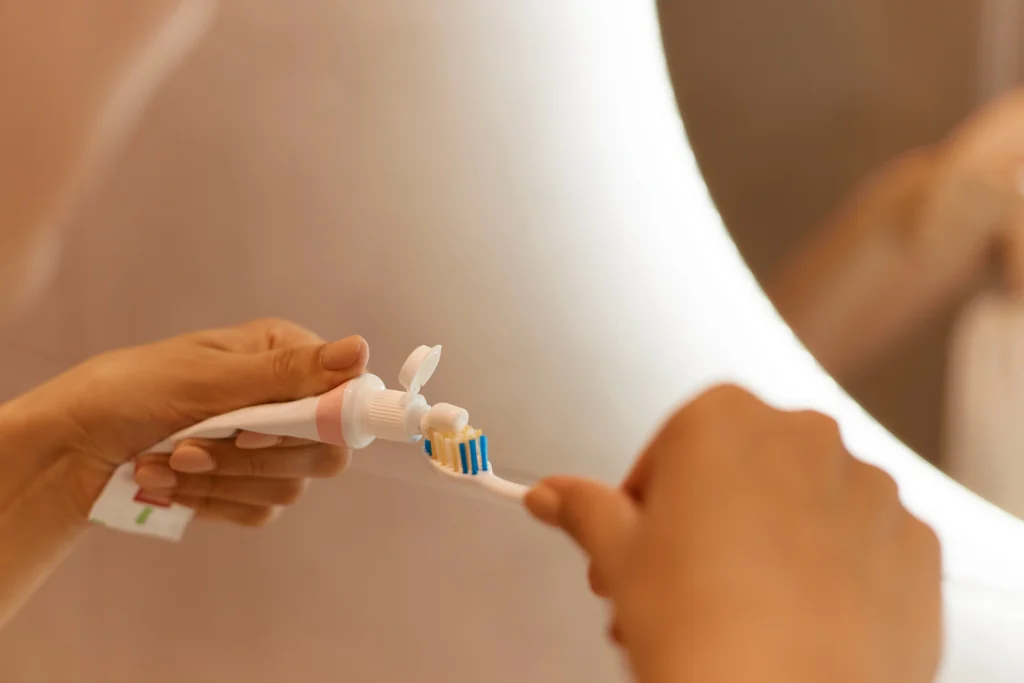
Turn the tube around.
Look through the small print.
You’re looking for something measured in:
ppm fluoride
“ppm” means parts per million.
For most adults, UK preventive guidance recommends toothpaste containing:
1,350–1,500 ppm fluoride
Fluoride helps prevent and control dental decay.
So you may find that a relatively inexpensive supermarket toothpaste contains the fluoride concentration recommended for routine adult use.
Meanwhile, a beautifully packaged premium toothpaste isn’t automatically more effective against decay simply because it costs several times as much.
The price isn’t the important number.
The fluoride concentration is.
Every day, your teeth are exposed to challenges from plaque, sugars and acids.
Fluoride helps make teeth more resistant to the processes involved in dental decay and supports remineralisation of early mineral loss.
That’s why fluoride toothpaste is such an important part of preventive dentistry.
UK guidance recommends that adults:
🪥 Brush at least twice daily
🌙 Brush last thing at night and on at least one other occasion
🦷 Use toothpaste containing 1,350–1,500 ppm fluoride
😗 Spit out after brushing
🚫 Avoid immediately rinsing with water
That last point surprises a lot of people.
You could spend £12 on toothpaste…
Brush beautifully for two minutes…
…and then immediately rinse your mouth thoroughly with water.
The problem?
You’re washing away much of the concentrated fluoride toothpaste left around your teeth.
Current UK preventive guidance advises:
Spit, don’t rinse.
After brushing, spit out the excess toothpaste rather than immediately rinsing your mouth thoroughly with water.
So before spending another £10 searching for the “ultimate” toothpaste, make sure you’re using your current one effectively.
Sometimes how you use toothpaste matters more than how luxurious the tube looks.
For routine decay prevention, an inexpensive toothpaste containing the recommended fluoride concentration can absolutely be a sensible choice.
Imagine two toothpastes:
Toothpaste A £2
✔ Contains 1,450 ppm fluoride
✔ You like the taste
✔ You use it twice every day
✔ You brush effectively
Toothpaste B £12
✔ Contains fluoride
✨ Premium packaging
🌿 Exotic flavour
💎 Luxury branding
Is Toothpaste B automatically six times better for your teeth?
No.
Price alone doesn’t tell you how effective a toothpaste will be for your individual needs.
However, there are situations where choosing a particular specialist toothpaste can be worthwhile.
Let’s look at them.
This is one area where choosing toothpaste based on its active ingredients and intended purpose can matter.
Sensitive teeth can occur for several reasons, including:
🦷 Exposed dentine
🩸 Gum recession
🪥 Tooth wear
🍋 Dental erosion
🦷 Cracks
🕳️ Dental decay
🔧 Recent dental treatment
Different sensitivity toothpastes may use different active ingredients or technologies designed to reduce sensitivity.
For some patients, regular use can be helpful.
But here’s the important point:
Sensitivity toothpaste shouldn’t become a substitute for finding out why your tooth is sensitive.
If one tooth suddenly becomes sensitive, the pain is getting worse, or sensitivity persists, arrange a dental examination.
A £10 sensitivity toothpaste cannot repair a cavity or diagnose a cracked tooth.
Here’s where marketing becomes particularly interesting.
Many people buy whitening toothpaste expecting:
“Whiter teeth.”
But what does “whitening” actually mean?
Many whitening toothpastes primarily help remove extrinsic surface staining.
That can be useful if your teeth have staining associated with things such as:
☕ Coffee
🍵 Tea
🚬 Smoking
🍷 Certain strongly coloured foods and drinks
Removing surface stains may make teeth appear cleaner or brighter.
But that is not necessarily the same as chemically whitening the natural colour of the teeth through professional tooth-whitening treatment.
So if you’re buying increasingly expensive whitening toothpastes because your teeth aren’t becoming dramatically lighter, the issue may be your expectations rather than the price of the product.
Generally, the effect of an everyday whitening toothpaste is more about surface stain management than producing the type of colour change associated with professional bleaching.
Your tooth colour is influenced by several things, including:
🦷 Enamel
🟡 Underlying dentine
☕ Surface staining
🧬 Natural variation
📅 Age
🔧 Existing fillings, crowns, veneers or bonding
If you’re unhappy with the colour of your teeth, it’s worth having them assessed before buying product after product.
Sometimes what looks like “staining” may actually relate to the natural colour of the tooth, enamel wear or existing restorations.
Charcoal toothpaste became enormously popular through social media.
Black toothpaste.
White smile.
Very Instagram-friendly.
But a dramatic-looking product doesn’t automatically mean stronger evidence behind it.
Potential considerations with charcoal toothpastes include:
⚫ Whether they contain an appropriate fluoride concentration
🪥 How abrasive the formulation is
😁 Whether the perceived whitening is largely stain removal
📱 Whether marketing claims are stronger than the supporting evidence
If a charcoal toothpaste contains little or no fluoride, choosing it instead of an appropriate fluoride toothpaste could mean losing an important source of protection against tooth decay.
Don’t choose toothpaste because it looks good in a TikTok video.
Check the ingredients and fluoride concentration.
The word natural has enormous marketing power.
But your teeth don’t read labels.
A toothpaste being described as:
🌿 Natural
🌱 Botanical
🍃 Organic
♻️ Eco
doesn’t automatically tell you how effective it is at preventing dental decay.
The important question remains:
Does it contain an appropriate concentration of fluoride?
Some people deliberately choose fluoride-free toothpaste.
For most patients, however, fluoride toothpaste is recommended because of its established role in preventing dental decay.
UK guidance notes that some emerging toothpaste products have limited or no evidence regarding effectiveness, so fashionable doesn’t necessarily mean better supported.
This phrase can be confusing.
Tooth enamel cannot simply regrow after a substantial piece of tooth structure has physically been lost.
If you have:
🦷 A chipped tooth
🕳️ A cavity
📉 Significant erosion
💥 A fractured tooth
…toothpaste cannot rebuild the missing anatomy of the tooth.
However, fluoride toothpaste can support remineralisation of early mineral changes before physical cavitation has occurred.
Some specialist products also contain ingredients marketed around strengthening or protecting tooth surfaces.
The key is understanding the difference between:
Supporting remineralisation and protection
and
Literally regrowing a missing piece of tooth.
They are not the same thing.
This phrase can be confusing.
Tooth enamel cannot simply regrow after a substantial piece of tooth structure has physically been lost.
If you have:
🦷 A chipped tooth
🕳️ A cavity
📉 Significant erosion
💥 A fractured tooth
…toothpaste cannot rebuild the missing anatomy of the tooth.
However, fluoride toothpaste can support remineralisation of early mineral changes before physical cavitation has occurred.
Some specialist products also contain ingredients marketed around strengthening or protecting tooth surfaces.
The key is understanding the difference between:
Supporting remineralisation and protection
and
Literally regrowing a missing piece of tooth.
They are not the same thing.
Healthy gums depend heavily on effective plaque removal.
If your gums bleed when you brush, changing toothpaste alone may not solve the underlying problem.
Bleeding gums can be associated with plaque-induced gum inflammation and, in some patients, periodontal disease.
What matters includes:
🪥 Effective brushing along the gumline
🧵 Cleaning between the teeth
🦷 Professional assessment
🧑⚕️ Dental hygiene or periodontal care where required
🚭 Managing relevant risk factors
UK periodontal guidance emphasises that mechanical plaque removal is of primary importance, while evidence is less certain for routinely recommending toothpaste additives specifically to control gingivitis and periodontitis.
So don’t rely on the words “gum care” on a tube if your gums are repeatedly bleeding.
Have the cause assessed.
Some toothpaste formulations contain ingredients intended to provide additional benefits around plaque or gum health.
These may be appropriate for some people.
But no toothpaste eliminates the need to physically remove plaque.
Think of toothpaste as helping your toothbrush do its job not replacing the job.
You still need to:
🪥 Brush effectively
🧵 Clean between your teeth as appropriate
🌙 Brush last thing at night
🦷 Attend dental examinations as recommended
A toothpaste can’t clean an area your toothbrush never reaches.
Strong mint can make your mouth feel incredibly fresh.
But:
Minty doesn’t necessarily mean healthy.
Persistent bad breath can have several possible causes.
Dental causes may include:
🦷 Plaque accumulation
🩸 Gum disease
👅 Tongue coating
🕳️ Dental problems
🍿 Food trapping
🏜️ Dry mouth
A toothpaste may temporarily improve the taste or smell in your mouth without addressing the underlying reason.
If bad breath persists despite good oral hygiene, it’s worth having your mouth assessed.
No.
That satisfying mouthful of foam can make a toothpaste feel powerful.
But foam isn’t a scoreboard for cleanliness.
Some toothpastes foam more because of their formulation.
Others are deliberately low-foaming.
The quality of your brushing depends far more on whether you’re:
🪥 Reaching all tooth surfaces
⏱️ Brushing for long enough
🦷 Cleaning around the gumline
🧵 Cleaning between the teeth
…than on how bubbly your mouth becomes.
You may see different fluoride compounds listed on toothpaste packaging, including:
Current UK guidance states that there is insufficient evidence to confidently recommend one fluoride formulation over another for general use.
For most shoppers, checking the fluoride concentration in ppm is therefore more useful than trying to become a toothpaste chemist in aisle seven. 😄
A familiar brand can be reassuring.
But brand recognition isn’t the same as clinical necessity.
You may find supermarket own-brand toothpastes with an appropriate fluoride concentration.
You may also find premium products with additional features you genuinely like.
The best toothpaste isn’t necessarily:
💷 The most expensive
📺 The most advertised
✨ The prettiest
📱 The most viral
It’s one that:
✔ Provides appropriate fluoride protection
✔ Suits your individual dental needs
✔ You tolerate and enjoy using
✔ Encourages you to brush consistently
✔ Has been recommended for a specific reason where appropriate
Then don’t force yourself to use it.
This is where personal preference genuinely matters.
If a toothpaste tastes so unpleasant that you:
🪥 Brush for 30 seconds instead of two minutes
🤢 Avoid brushing
🚿 Rinse repeatedly afterwards
…saving a few pounds isn’t particularly useful.
If spending a little more gives you a flavour or texture that means you brush consistently and effectively, that’s a perfectly reasonable choice.
The point isn’t:
“Always buy the cheapest toothpaste.”
It’s:
“Don’t assume expensive automatically means clinically better.”
Both matter.
Fluoride toothpaste is important for preventing dental decay.
But toothpaste cannot compensate for ineffective brushing.
You could buy the most sophisticated toothpaste in the shop and still leave plaque behind if you consistently miss:
🦷 The gumline
🦷 Back teeth
🦷 Inside surfaces
🦷 Difficult-to-reach areas
Likewise, a standard fluoride toothpaste used thoroughly and consistently can be extremely effective as part of good daily oral hygiene.
Your toothbrush can’t effectively clean every surface between neighbouring teeth.
Depending on your individual needs, your dental team may recommend:
🧵 Dental floss
🪥 Interdental brushes
or another suitable method.
This matters particularly for gum health.
Spending an extra £8 on toothpaste while completely ignoring the plaque between your teeth may not be the best use of your dental budget.
Aim for approximately:
Two minutes, twice a day.
One brushing session should be last thing at night, with another at another time during the day.
And remember:
Spit out the toothpaste afterwards rather than immediately rinsing it away.
That’s good advice whether your toothpaste cost £2 or £12.
Now we’re talking about something very different from simply buying a premium toothpaste.
Some patients at higher risk of dental decay may be prescribed toothpaste containing a higher concentration of fluoride.
In the UK, higher-strength formulations such as 2,800 ppm or 5,000 ppm fluoride toothpaste may be considered or prescribed for appropriate patients depending on factors such as age and decay risk.
These aren’t simply “luxury toothpastes”.
They’re used for specific clinical reasons.
Don’t start using someone else’s prescription toothpaste.
If your dentist thinks you would benefit from higher-fluoride toothpaste, they can advise you appropriately.
Children’s toothpaste deserves separate consideration because the appropriate amount and fluoride concentration depend on age and individual decay risk.
UK guidance recommends:
👶 Under 3: use only a smear of toothpaste
🧒 Ages 3–6: use a pea-sized amount
Older children generally use family-strength fluoride toothpaste, with specific recommendations depending on age and decay risk.
Parents should supervise brushing and discourage children from eating or licking toothpaste.
If you’re unsure which toothpaste is appropriate for your child, ask your dental team rather than choosing purely on the cartoon character on the tube. 🦖🪥
Standing in Boots, a supermarket or your local pharmacy staring at 40 different tubes?
Keep it simple.
For a typical adult looking for everyday toothpaste:
1️⃣ Turn the tube around.
Don’t be distracted by the front.
2️⃣ Find the fluoride concentration.
Look for ppm fluoride.
3️⃣ For most adults, look for 1,350–1,500 ppm.
That’s the range recommended in UK preventive guidance.
4️⃣ Consider whether you have a specific problem.
Sensitivity?
High decay risk?
Significant staining?
Dry mouth?
Gum problems?
Your dentist or hygienist may recommend something more specific.
5️⃣ Pick one you’ll actually use.
Twice a day.
Consistently.
That’s much more important than owning the fanciest tube in the bathroom.
Sometimes, you’re paying for a genuinely different formulation.
Sometimes, you’re paying for:
📦 Packaging
📣 Advertising
🌿 Flavour
💎 Brand positioning
✨ Texture
🧪 Additional ingredients
😁 Cosmetic claims
And sometimes those things matter to you.
There’s nothing wrong with buying premium toothpaste because you prefer it.
But it’s useful to distinguish:
“I prefer this toothpaste.”
from:
“This toothpaste must protect my teeth better because it costs more.”
Those are very different claims.
1. “Whitening”
Ask whether you’re expecting surface stain removal or a major change in natural tooth colour.
2. “Natural”
Check whether it contains fluoride at an appropriate concentration.
3. “Enamel repair”
Remember that toothpaste cannot rebuild a physically missing chunk of tooth.
4. “Gum care”
Useful ingredients may exist, but persistent bleeding gums still need proper plaque control and potentially professional assessment.
5. “Premium”
Premium is a marketing category.
It isn’t a dental diagnosis.
Personalised advice can be particularly useful if you have:
🥶 Sensitive teeth
🕳️ Repeated cavities
🩸 Gum disease
🏜️ Dry mouth
🦷 Exposed roots
📉 Tooth wear or erosion
😁 Significant staining
🔧 Extensive dental restorations
🦷 Orthodontic appliances
💊 A need for prescription-strength fluoride toothpaste
In these situations, choosing toothpaste based solely on price or supermarket advertising may not be ideal.

Imagine you’re an adult with no particular dental problems.
Option A
💷 £2
🦷 1,450 ppm fluoride
😋 You like the taste
Option B
💷 £12
✨ Luxury packaging
🌿 Himalayan-Antarctic-Moon-Dust Mint
📱 An influencer says it’s amazing
❓ You haven’t checked the fluoride concentration
Option A already ticks an important evidence-based box.
With Option B, we’d turn the tube around and read the label before being impressed by the moon dust. 😄
🪥 The Bigger Secret: The Best Toothpaste Is the One You Use Properly
People can become obsessed with finding the perfect product.
But the basics remain remarkably powerful:
✔ Brush at least twice daily
✔ Use an appropriate fluoride toothpaste
✔ Brush last thing at night
✔ Clean every tooth surface carefully
✔ Clean between your teeth as appropriate
✔ Spit rather than immediately rinsing
✔ Limit the frequency of sugary foods and drinks
✔ Attend dental examinations based on your individual needs
No toothpaste, however expensive can compensate for consistently poor oral hygiene.
Is expensive toothpaste better than cheap toothpaste?
Not automatically. Price alone does not determine how effectively a toothpaste protects against dental decay. For most adults, an important consideration is whether it contains the recommended 1,350–1,500 ppm fluoride.
Is £2 toothpaste good enough?
It can be. An inexpensive toothpaste containing an appropriate fluoride concentration may be perfectly suitable for everyday use. Individual dental problems may require a more specialised product.
How much fluoride should adult toothpaste contain?
UK guidance recommends toothpaste containing 1,350–1,500 ppm fluoride for adults.
Is whitening toothpaste worth paying extra for?
It depends on your goal. Whitening toothpastes may help manage external surface staining, but don’t assume they will produce the same type of colour change as professional tooth whitening.
Does charcoal toothpaste whiten teeth?
Some products may help remove surface staining, but charcoal toothpaste shouldn’t automatically be assumed to whiten the natural tooth colour. Check the fluoride content and be cautious about exaggerated claims.
Is fluoride-free toothpaste okay?
For most people, UK preventive guidance recommends fluoride toothpaste because fluoride helps prevent dental decay. If you’re considering a fluoride-free product, discuss your individual circumstances with your dentist.
Is sensitivity toothpaste worth it?
Sensitivity toothpaste can be useful for some people, depending on the cause of the sensitivity and formulation. Persistent, worsening or localised sensitivity should still be assessed by a dentist.
Can toothpaste repair enamel?
Fluoride can support remineralisation of early mineral changes, but toothpaste cannot regrow tooth structure that has physically been lost through a cavity, fracture or significant wear.
Should I rinse after brushing?
No. UK guidance recommends spitting out excess toothpaste rather than immediately rinsing with water, helping maintain fluoride concentration around the teeth.
Do I need prescription toothpaste?
Most people don’t. Higher-fluoride prescription toothpaste may be recommended for people at increased risk of dental decay following professional assessment.
So, does spending six times more give you six times healthier teeth?
No.
An expensive toothpaste may contain ingredients that are genuinely useful for a particular problem.
You may also prefer its taste, texture or formulation.
And that’s completely fine.
But for everyday decay prevention, price and fancy packaging aren’t the things you should focus on first.
Look at:
🦷 Fluoride concentration
🪥 Your individual dental needs
⏱️ How consistently you brush
🧵 Whether you’re cleaning effectively
😗 Whether you spit rather than rinse
And whether you’re actually using the toothpaste correctly.
Sometimes the best toothpaste on the shelf isn’t the one with the biggest price tag.
It’s the one that’s appropriate for your mouth.
At Centre of Dental Excellence in Stanmore, our dentists and hygienists can provide personalised preventive advice based on your teeth, gums and individual risk factors.
We can help with:
✔ Toothpaste and fluoride advice
✔ Sensitive teeth
✔ Gum health
✔ Dental decay prevention
✔ Tooth wear and erosion
✔ Staining
✔ Professional dental hygiene
✔ Children’s preventive dentistry
✔ Higher-decay-risk care
✔ Comprehensive dental examinations
Instead of buying toothpaste based on the biggest promise on the box, find out what your teeth actually need.
We welcome patients from:
📍 Stanmore
📍 Harrow
📍 Edgware
📍 Pinner
📍 Bushey
📍 Borehamwood
📍 Northwood
📍 Watford
📍 North West London
📞 Need Personalised Advice for Your Smile?
Centre of Dental Excellence
46 Church Road
Stanmore, Middlesex
HA7 4AH
📞 020 8420 7407
Book a dental examination or hygiene appointment and get advice tailored to your teeth rather than the toothpaste aisle.