Think Your Dentist Only Looks for Cavities?
Think again. 😄
When you sit in the dental chair, your dentist isn’t simply checking whether you have a cavity.
Your teeth, gums, bite and jaw can provide useful clues about your oral health, habits and lifestyle.
Sometimes, the signs are surprisingly obvious.
The way your teeth are worn could suggest that you grind them. Staining may provide clues about what you regularly eat or drink. Changes in your gums could indicate that your oral hygiene routine needs some attention.
And no, your dentist doesn’t have magical powers but your mouth can tell quite a story.
At Centre of Dental Excellence in Stanmore, our dental examinations are about much more than simply checking for tooth decay. We look at your teeth, gums, bite and overall oral health to identify potential problems early and help you maintain a healthy smile.
Here are seven surprising things your teeth may reveal.
1. 😬 You Might Be Grinding Your Teeth
Do you ever wake up with a sore jaw?
Perhaps you occasionally get headaches or notice that your teeth feel sensitive.
You could be grinding or clenching your teeth, sometimes without even realising it.
Dental professionals can sometimes spot signs of grinding by looking at the surfaces of your teeth.
Repeated grinding can cause:
Some people grind their teeth during the day, while others do it during sleep.
Stress and anxiety can contribute to clenching and grinding, although there can be other causes too.
If your dentist notices unusual wear patterns, they may ask whether you’ve experienced jaw pain, headaches, tooth sensitivity or disturbed sleep.
So if you’ve been wondering why your dentist keeps asking about your jaw, there may be a reason. 👀
2. ☕ You Probably Drink a Lot of Coffee
Your dentist doesn’t need to see your coffee cup to know you might be a regular coffee drinker.
Certain foods and drinks can cause external staining on teeth.
Coffee, tea, red wine and some strongly coloured foods can gradually contribute to surface discolouration.
The good news?
Surface stains don’t necessarily mean your teeth are unhealthy.
Professional dental hygiene can help remove many types of external staining and plaque build-up, while whitening treatments can sometimes help with the underlying tooth colour when appropriate.
Your dentist or hygienist can help determine whether you’re dealing with surface staining, natural tooth colour or another cause of discolouration.
So yes that daily coffee habit might be leaving a little evidence behind. ☕
3. 🧵 You May Not Be Flossing as Much as You Say You Are
We’ve all been there.
Dentist: “Do you clean between your teeth?”
Patient: “Yes…”
Dentist: 👀
Your dentist isn’t trying to catch you out.
However, your gums can sometimes provide clues about how effectively you’re cleaning between your teeth.
Plaque can accumulate in areas that a toothbrush doesn’t reach properly, particularly between teeth and along the gumline.
This can contribute to:
If your dentist notices inflammation between your teeth, they may recommend floss, interdental brushes or another method of cleaning between your teeth.
The important thing isn’t whether you use traditional string floss.
It’s finding an effective way to clean between your teeth every day.
4. 😴 You Could Be Grinding Your Teeth While You Sleep
This one is slightly different from simply clenching during the day.
Some people grind their teeth at night without knowing they’re doing it.
You may have absolutely no idea it’s happening until your dentist notices the evidence.
Signs can include:
Sometimes a partner may notice grinding sounds during sleep before you notice any symptoms yourself.
If your dentist suspects nighttime grinding, they may discuss ways of protecting your teeth and managing the underlying factors contributing to the problem.
A custom-made mouthguard or splint may be appropriate for some patients, depending on the cause and clinical assessment.
5. 🍋 Your Diet May Be More Acidic Than You Think
Your teeth can sometimes reveal clues about repeated exposure to acids.
Acid erosion occurs when acids gradually wear away the protective enamel covering your teeth.
Sources of dietary acid can include:
The issue isn’t necessarily having one acidic food or drink occasionally.
Repeated exposure throughout the day can increase the amount of time your teeth are exposed to acid.
Your dentist may notice areas where enamel appears thinner or worn and ask about your diet and drinking habits.
If you’re regularly sipping acidic drinks throughout the day, your dentist may suggest simple changes to reduce the amount of acid exposure.

6. 😰 Your Teeth May Give Clues About Stress
Stress doesn’t just affect your mood.
For some people, it can affect their mouth too.
When you’re stressed, you may unconsciously clench your teeth or grind them, particularly during sleep.
Over time, this can contribute to tooth wear, jaw discomfort and other symptoms.
Some people also develop habits such as biting their cheeks, lips or nails when they’re anxious.
Your dentist may notice signs that suggest these habits are occurring and ask whether you’ve experienced increased stress, headaches or jaw tension.
Of course, your teeth can’t tell your dentist exactly why you’re stressed but they can sometimes provide clues that something is going on.
And that conversation can be useful.
7. 🚬 Your Teeth May Reveal Tobacco Exposure
Smoking and tobacco use can have noticeable effects on your mouth.
A dentist may observe:
Tobacco use is also an important risk factor for gum disease and oral cancer.
This is one reason routine dental examinations are important, even if your teeth don’t hurt.
Your dentist isn’t there to judge you.
If they notice changes that could be associated with tobacco use, the purpose is to understand your oral-health risks and provide appropriate advice.
It’s not just individual teeth that tell a story.
Your bite can also provide useful information.
Your dentist may assess how your upper and lower teeth meet when you close your mouth.
Changes in your bite can sometimes be associated with:
A change in the way your teeth come together is worth mentioning to your dentist, particularly if it has happened recently.
No. 😂
Your dentist isn’t a detective with a crystal ball.
Most signs found during a dental examination are clues rather than definitive proof.
For example, staining doesn’t automatically mean someone drinks coffee. Tooth wear doesn’t necessarily prove that someone grinds their teeth.
There can be several possible explanations for the same dental finding.
That’s why your dentist will usually combine what they see with:
The goal isn’t to judge your lifestyle.
It’s to understand your oral health and identify problems early.
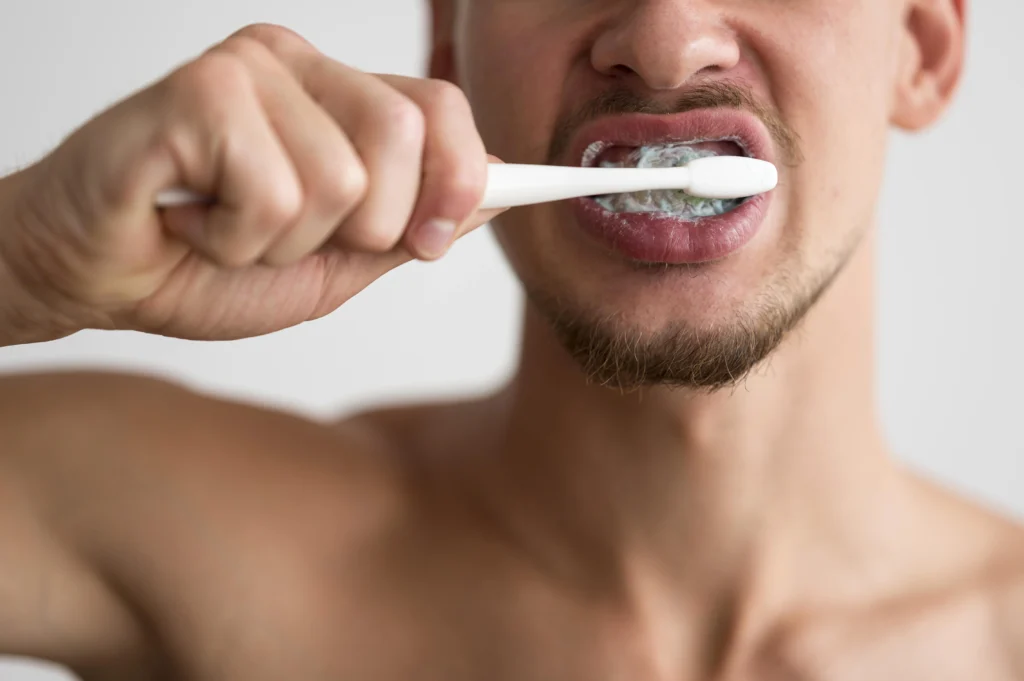
One of the biggest advantages of regular dental check-ups is that your dentist can identify changes before they become bigger problems.
A routine examination can assess:
🦷 Your teeth
Checking for decay, cracks, wear, damage and other changes.
🪥 Your gums
Looking for signs of inflammation, gum disease or recession.
😬 Your bite
Assessing how your teeth meet and looking for signs of wear or other changes.
👄 Your mouth
Checking the soft tissues of your mouth for unusual changes.
🩻 Your underlying structures
Where appropriate, dental X-rays can help identify problems that aren’t visible during a routine visual examination.
Regular examinations aren’t just about fixing problems.
They’re also about preventing them.
Your dentist can provide better advice when they know what’s actually happening.
So don’t be embarrassed to mention things such as:
Your dentist has heard it all before.
Honest information helps them make better clinical decisions and provide more personalised care.
Before you go, here are a few things your teeth might be trying to tell you:
🦷 Tooth wear can sometimes reveal repeated habits.
☕ Certain drinks can gradually stain your teeth.
😬 Grinding can cause significant tooth wear over time.
🧵 Your gums can provide clues about how effectively you’re cleaning between your teeth.
🍋 Frequent acid exposure can contribute to enamel erosion.
😰 Stress can contribute to clenching and grinding for some people.
🚬 Tobacco use can affect both your teeth and gums.
So next time you’re sitting in the dental chair, remember:
Your dentist isn’t judging you, they’re reading the clues. 🔍🦷
You don’t need to wait until something hurts.
It’s worth arranging a dental assessment if you’ve noticed:
Early assessment can make it easier to identify the cause and decide whether treatment is necessary.
Your Dentist May Know More Than You Think! 😄
Your teeth aren’t just there to give you a smile.
They can provide valuable clues about your oral health, habits and possible dental problems.
From grinding and staining to gum health and enamel wear, your dentist may notice things you’ve never even considered.
But there’s no need to feel nervous or embarrassed.
The purpose of these observations isn’t to judge you.
It’s to help you understand what’s happening in your mouth and, where necessary, take action before a small problem becomes a bigger one.
If you haven’t had a dental examination recently, why not make today the day you book one?
📍 Dental Examinations in Stanmore, North West London
Centre of Dental Excellence
46 Church Road
Stanmore, Middlesex
HA7 4AH
📞 020 8420 7407
We welcome patients from:
📍 Stanmore
📍 Harrow
📍 Edgware
📍 Pinner
📍 Bushey
📍 Borehamwood
📍 Northwood
📍 Watford
📍 North West London
If you’d like to understand more about your oral health, our team is here to help.
Keywords : things your teeth can tell your dentist, what your teeth say about you, dentist Stanmore, dental examination Stanmore, private dentist Stanmore, oral health, dental check-up Stanmore, signs of teeth grinding, teeth staining, gum health, tooth wear