Can you have a cavity without toothache? Yes. Discover 7 possible signs of tooth decay you might miss, how dentists detect cavities and when to book a dental check-up in Stanmore.
Unfortunately, it’s not quite that simple.
One of the most common misconceptions about tooth decay is that you’ll know when you have a cavity because your tooth will hurt.
But tooth decay can develop without causing obvious pain, particularly in its earlier stages.
You might be eating normally.
Drinking hot and cold drinks without a problem.
Sleeping perfectly well.
And yet decay may still be developing in a tooth.
That’s one of the reasons regular dental examinations are important, they aren’t simply appointments for people who already have toothache.
At Centre of Dental Excellence in Stanmore, we regularly assess patients who feel that everything is fine but want reassurance about their dental health.
So, can you really have a cavity without knowing it?
Yes.
Here are seven possible signs that could be easy to overlook.
A cavity is an area of tooth damage caused by dental decay.
Bacteria within dental plaque interact with sugars in the foods and drinks we consume and produce acids.
Repeated acid attacks can cause minerals to be lost from the tooth surface.
In the earlier stages, this process may affect the enamel without creating an obvious hole that you can see or feel.
If the process continues, the tooth structure can break down further and a cavity can develop.
And here’s the important part:
Early tooth decay may not hurt.
Enamel itself doesn’t contain nerves.
As decay progresses deeper towards the dentine and eventually the pulp at the centre of the tooth, symptoms may become more noticeable.
That’s why waiting for pain isn’t a reliable way to detect decay early.
1. 🥶 Sensitivity to Cold
Does one tooth suddenly react when you drink:
🧊 Cold water
🥤 A chilled drink
🍦 Ice cream
Sensitivity doesn’t automatically mean you have a cavity.
It can also occur because of:
However, a new or increasing sensitivity in a particular tooth can be a reason to have it checked.
Pay particular attention if the sensitivity is becoming more frequent or lasts longer than it used to.
2. 🍰 Your Tooth Hurts When You Eat Something Sweet
This is another symptom patients sometimes dismiss.
You bite into:
🍫 Chocolate
🍰 Cake
🍬 Sweets
🍯 Something sugary
…and suddenly experience a sharp sensation from one particular tooth.
Then it disappears.
Because the discomfort doesn’t last, it’s tempting to forget about it.
But sensitivity to sweet foods can sometimes occur when tooth structure has been compromised.
Again, this doesn’t prove that you have decay but repeated sensitivity from the same tooth deserves investigation.
3. 🍿 Food Keeps Getting Stuck in the Same Place
We’ve all had food stuck between our teeth occasionally.
But what if it happens after almost every meal in exactly the same spot?
Perhaps:
🥩 Meat constantly catches there
🥬 Fibres become trapped
🍿 Popcorn wedges into the gap
🧵 Floss comes out covered in food debris
Repeated food trapping can happen for several reasons, including:
The shape or position of your teeth
Decay between neighbouring teeth can sometimes alter the shape of the tooth and create an area where food becomes trapped.
If you’re constantly reaching for floss after eating because the same space always catches food, mention it to your dentist.
4. 🧵 Your Floss Keeps Catching or Shredding
This one is easy to overlook.
You’re flossing and notice that the floss:
There are several possible explanations.
It could relate to:
🦷 Tartar
🦷 The shape of the tooth
🦷 A rough filling or restoration
🦷 A damaged filling
🦷 A rough tooth surface
🦷 Decay
Don’t use floss as a DIY diagnostic tool but if it repeatedly catches or shreds in the same place, it’s worth mentioning at your dental examination.
5. ⚫ You Notice a Dark Spot, White Patch or Change in Your Tooth
People often assume:
“Black spot = cavity.”
But dental diagnosis isn’t always that straightforward.
Teeth naturally have:
Some dark areas are staining rather than active decay.
Equally, early changes associated with mineral loss can sometimes appear as a white or chalky area rather than a dark hole.
So don’t panic every time you notice a mark.
But don’t diagnose it yourself either.
If you’ve noticed a new change in the colour or surface of a tooth, your dentist can assess whether it is:
✔ Normal anatomy
✔ Staining
✔ An area to monitor
✔ Tooth decay
✔ Something else entirely
6. 👅 There’s a Bad Taste or Smell From One Area
Persistent bad breath has many possible causes and doesn’t automatically mean you have tooth decay.
However, if food and plaque repeatedly collect around a damaged tooth or difficult-to-clean area, you might notice:
😷 An unpleasant smell when flossing
👅 A bad taste
🧵 Debris repeatedly coming from the same space
🩸 Bleeding around the area
This could also be related to gum inflammation or other dental problems.
If one particular area of your mouth consistently tastes or smells unpleasant despite good cleaning, it’s worth having it examined.
7. 😶 Absolutely Nothing Feels Wrong
Yes, this is number seven.
And arguably it’s the most important.
Sometimes there is no sensitivity.
No obvious hole.
No bad taste.
No pain when chewing.
No dramatic toothache at 2am.
You may have no idea anything is happening.
Early decay can sometimes be identified during a routine dental examination before the patient has noticed any symptoms.
That’s why:
“It doesn’t hurt” doesn’t necessarily mean “there’s nothing wrong.”
Not always.
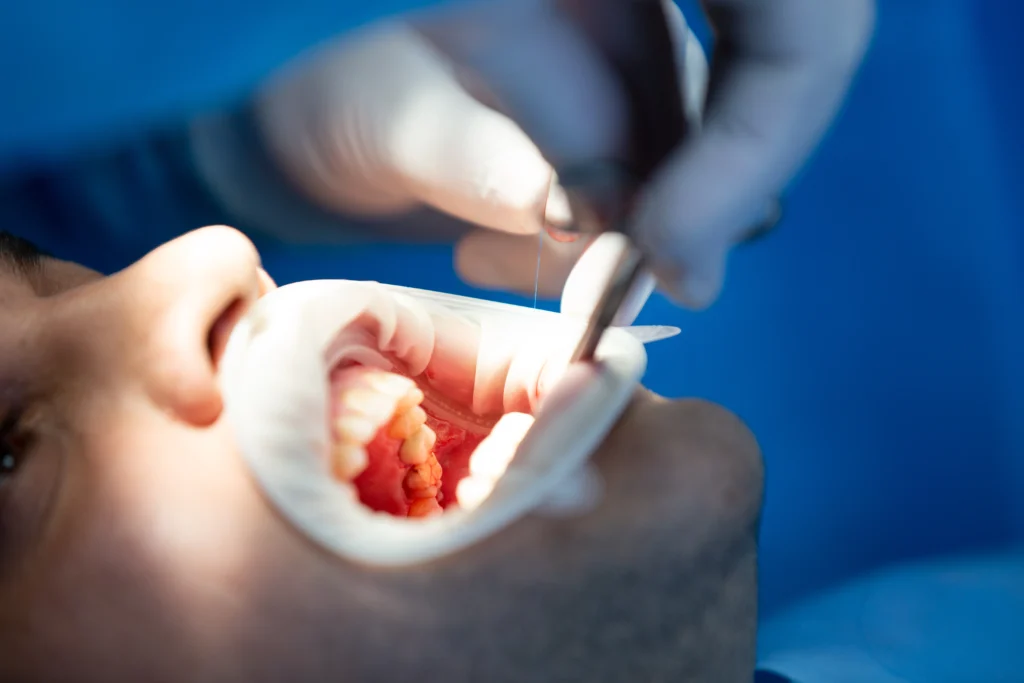
Some areas of the teeth are easier to examine directly than others.
Decay can sometimes develop:
Your dentist uses the information from your history and clinical examination to determine whether further investigation is appropriate.
Dental X-rays can provide information that isn’t always available from visual examination alone.
For example, certain dental X-rays may help your dentist assess areas between teeth, where early decay can otherwise be difficult to see directly.
X-rays may also provide information about existing restorations and other dental structures.
However, this doesn’t mean every patient needs an X-ray at every visit.
The type and frequency of dental X-rays should be based on your individual clinical needs and risk factors.
At Centre of Dental Excellence, X-rays are recommended where clinically appropriate.
Sometimes a cavity or damaged tooth may eventually become visible.
But relying on your bathroom mirror isn’t a reliable dental examination.
Many tooth surfaces simply aren’t easy for you to inspect yourself.
And even when you can see a mark, you can’t necessarily tell whether it is:
If you’re unsure, let your dentist assess it.
This is where the distinction between early tooth decay and an established cavity becomes important.
In its earliest stages, before the tooth surface has broken down into a cavity, mineral loss may sometimes be managed with preventive measures.
Depending on the individual situation, advice may include:
✔ Improved plaque control
✔ Fluoride toothpaste
✔ Dietary changes
✔ Reducing how frequently teeth are exposed to sugars
✔ Professional fluoride treatment where appropriate
✔ Monitoring the area
Once tooth structure has broken down sufficiently to form a cavity, restorative treatment may be required.
This is another reason why detecting changes earlier can be beneficial.
Sugar plays an important role in dental decay, but the situation is more nuanced than:
“I ate chocolate, therefore I have a cavity.”
One particularly important factor is how frequently your teeth are exposed to fermentable carbohydrates and sugars.
If you’re constantly:
🍬 Grazing on sweets
🥤 Sipping sugary drinks
☕ Drinking sweetened tea or coffee throughout the day
🍪 Snacking frequently
your teeth may experience repeated acid challenges.
For many people, reducing the frequency of sugary foods and drinks between meals is an important part of decay prevention.
“Sugar-free” doesn’t necessarily mean “harmless to teeth.”
Some sugar-free fizzy drinks and other acidic beverages may still contribute to dental erosion.
Erosion and tooth decay are different processes, but both can damage tooth structure.
Water remains one of the most tooth-friendly everyday drinks.
Yes.
Brushing twice daily with fluoride toothpaste is extremely important, but cavities can still occur.
Why?
Because risk can also be influenced by factors such as:
Someone can genuinely say “I brush twice every day” and still have areas that aren’t being cleaned effectively.
Your dentist or hygienist can help identify those areas.
Decay between teeth is particularly relevant because those surfaces aren’t cleaned effectively by a toothbrush alone.
Depending on your individual needs, cleaning between the teeth may involve:
Your dental team can advise which approach is most appropriate for your mouth.
Yes, decay can sometimes develop around the margins of an existing restoration.
A filling doesn’t make the tooth immune to future problems.
Over time, restorations and teeth are exposed to:
That’s why existing fillings, crowns and other restorations are also checked during dental examinations.
Not every area of early decay is managed in exactly the same way.
Treatment depends on factors including:
An early area may sometimes be managed preventively and monitored.
A more established cavity may require a filling or another type of restoration.
If decay has progressed much further into the tooth, more extensive treatment may be required.
The important thing is to base treatment on a proper diagnosis.
Tooth decay doesn’t necessarily remain the same forever.
If it progresses deeper into the tooth, you may eventually develop:
🥶 Increasing sensitivity
⚡ Toothache
😖 Pain when biting
🦷 Loss of tooth structure
🔬 Inflammation or infection involving the dental pulp
🤕 Swelling or infection in more advanced situations
A relatively straightforward problem can therefore become more complicated if allowed to progress.
That doesn’t mean every tiny mark on a tooth is an emergency.
It means that suspected decay is better assessed than guessed at.
Does a Deep Cavity Mean I Need Root Canal Treatment?
Not automatically.
But if decay progresses deeply enough to significantly affect or infect the pulp inside the tooth, root canal treatment may sometimes be required to save the tooth.
Whether a tooth needs:
🦷 Preventive management
🦷 A filling
👑 A more substantial restoration
🔬 Root canal treatment
or another approach depends on the individual tooth and diagnosis.
This is exactly why earlier assessment can make such a difference.
Yes.
Children may also have dental decay without complaining of pain.
Young children may additionally find it difficult to describe dental symptoms accurately.
Parents can look out for changes such as:
Regular dental care from an early age helps monitor developing teeth and establish preventive habits.
Arrange an assessment if you notice:
✔ New sensitivity
✔ Pain with sweet foods
✔ A visible change in a tooth
✔ Food repeatedly trapping in one place
✔ Floss constantly catching or shredding
✔ Pain when biting
✔ A filling that feels different or damaged
✔ Persistent bad taste from one area
✔ Toothache
And remember:
You don’t have to wait for symptoms.
A routine dental examination can be worthwhile even when your mouth feels completely healthy.

Can you have a cavity without toothache?
Yes. Tooth decay, particularly in its earlier stages, may not cause pain or other obvious symptoms.
How do I know if I have a cavity?
Possible signs include sensitivity, discomfort with sweet foods, visible changes, food trapping, roughness or toothache. However, cavities can also be symptomless, so a dental examination is the appropriate way to assess a suspected problem.
What does a cavity feel like?
Some cavities don’t feel like anything. Others may cause sensitivity to cold or sweet foods, discomfort when chewing or toothache as the problem progresses.
Can a small cavity heal itself?
Very early mineral loss before a physical cavity forms may sometimes be managed with preventive measures. Once tooth structure has broken down into an established cavity, it cannot simply grow back.
Does a black spot on a tooth mean a cavity?
Not necessarily. Dark areas may be staining, natural grooves or decay. A dentist can assess the area properly.
Can a cavity develop underneath a filling?
Decay can develop around the margins of existing restorations. Your dentist will check restorations as part of your dental assessment.
Can I have a cavity if I brush twice every day?
Yes. Brushing twice daily is essential, but other factors including diet, cleaning technique, interdental plaque, dry mouth and individual risk can influence dental decay.
Do cavities always show up on X-rays?
Dental X-rays can help detect some areas of decay, particularly between teeth, but diagnosis involves considering the clinical examination and other relevant information as well.
Will I definitely need a filling if my dentist finds early decay?
Not necessarily. Management depends on how advanced the decay is and whether the tooth surface has broken down. Some early changes may be managed preventively and monitored.
One of the most useful things to remember about dental decay is simple:
Pain is a late warning sign for some dental problems not an early detection system.
Your teeth can feel perfectly comfortable while changes are beginning.
Regular dental examinations give your dentist the opportunity to assess your teeth, identify areas that may need monitoring and recommend preventive or restorative treatment when appropriate.
So if your thinking has always been:
“I’ll go to the dentist when something hurts…”
it may be worth changing that to:
“I’ll go to the dentist so we can hopefully deal with things before they hurt.”
🔍 Dental Examinations & Tooth Decay Assessment in Stanmore
At Centre of Dental Excellence in Stanmore, our team provides comprehensive dental examinations and preventive care to help patients understand and maintain their oral health.
Your care may include, where appropriate:
✔ Comprehensive dental examination
✔ Assessment for dental decay
✔ Gum health assessment
✔ Dental X-rays where clinically indicated
✔ Clinical photography
✔ Dental hygiene
✔ Preventive advice
✔ Fillings and restorative dentistry
✔ Root canal treatment where required
✔ Personalised treatment planning
We welcome patients from:
📍 Stanmore
📍 Harrow
📍 Edgware
📍 Pinner
📍 Bushey
📍 Borehamwood
📍 Northwood
📍 Watford
📍 North West London
📞 Think You Might Have a Cavity or Simply Due a Check-Up?
Centre of Dental Excellence
46 Church Road
Stanmore, Middlesex
HA7 4AH
📞 020 8420 7407
Whether you’ve noticed sensitivity, a suspicious mark, food trapping or absolutely no symptoms at all, a dental examination can give you a clearer understanding of your oral health.
Don’t wait for toothache to be your reminder to visit the dentist.