
If your dentist has mentioned root canal treatment, you may immediately start wondering: Do I really need it? Is there another way to save my tooth? Will it hurt? What happens if I leave it?
These are very common questions.
Root canal treatment, also called endodontic treatment, is used when the soft tissue inside a tooth (the dental pulp) becomes inflamed or infected. The aim is to remove the damaged or infected tissue, clean and disinfect the root canal system, and seal the tooth so that it can be retained where clinically appropriate.
At Centre of Dental Excellence in Stanmore, our endodontic team provides root canal treatment for patients with a range of dental problems, including deep decay, cracked or damaged teeth and dental infections.
But how do you know when a root canal may actually be necessary?
Inside every tooth is a space containing nerves, blood vessels and connective tissue called the dental pulp.
When this tissue becomes severely inflamed or infected, the problem may not be treatable with a simple filling.
Root canal treatment involves accessing the inside of the tooth, removing the affected pulp, carefully cleaning and disinfecting the canals and sealing them.
The purpose is to preserve the natural tooth where possible, rather than automatically removing it.
The cause may include:
Not every toothache means you need a root canal. A proper dental examination is needed to determine the cause of the symptoms and whether root canal treatment is appropriate.
1. Your Tooth Hurts When You Bite or Chew
Pain when biting down can have several causes, including a cracked tooth, inflammation around the root or problems affecting the pulp.
If the pain is persistent or keeps returning, it is worth having the tooth assessed rather than assuming it will settle.
Your dentist may examine the tooth, test its response and take an X-ray where clinically appropriate.
The important point is that pain when biting does not automatically mean you need a root canal but it is a symptom that should not be ignored.
3. You Have Toothache That Keeps Coming Back
Toothache that comes and goes can be particularly easy to ignore.
You may experience pain for a few hours or days, feel better and assume the problem has disappeared.
But intermittent dental pain can have a number of underlying causes, including decay, damaged restorations, cracks or inflammation affecting the tooth nerve.
Centre of Dental Excellence has previously highlighted that recurring tooth pain may warrant assessment even when you feel comfortable on the day of your appointment.
Pain disappearing does not necessarily mean the underlying problem has disappeared.
5. Your Gum Is Swollen Near One Tooth
A small swelling or tender area around a particular tooth can sometimes be associated with infection.
You may also notice:
Dental infections can sometimes develop into an abscess.
If you notice swelling around a tooth, arrange a dental assessment rather than waiting for it to disappear on its own.
If swelling becomes severe or spreads towards the eye or neck, or if you have difficulty breathing, swallowing or speaking, urgent medical attention is required.
7. Your Dentist Has Told You That the Nerve May Be Damaged
Sometimes the decision to consider root canal treatment comes from diagnostic findings rather than severe pain.
A tooth can have significant pulp damage or infection without causing dramatic symptoms.
Your dentist may identify concerns through:
This is why “it doesn’t hurt” does not always mean “nothing is wrong.”
2. Your Tooth Is Very Sensitive to Hot or Cold
Have you noticed that one particular tooth reacts strongly when you drink something hot or cold?
Sensitivity can have many causes, including exposed dentine, tooth wear, decay, cracks or gum recession.
However, when sensitivity is intense, prolonged or associated with other symptoms, the dental pulp may be involved.
A dentist can assess whether the problem is likely to require a filling, another form of restoration, monitoring or root canal treatment.
4. Your Tooth Has Become Darker or Discoloured
A tooth that becomes noticeably darker than the teeth around it can sometimes indicate previous trauma or changes within the tooth.
Discolouration can have several causes, so it should not automatically be interpreted as an infection.
However, when a discoloured tooth is accompanied by pain, tenderness, previous trauma or other symptoms, your dentist may investigate the health of the pulp.
An X-ray and clinical examination can help determine what is happening beneath the surface.
6. You Have Had a Deep Filling or Extensive Dental Work
A tooth that has undergone extensive dental treatment can sometimes develop problems with the pulp.
For example, a tooth with deep decay may have been very close to the pulp before it was restored.
Repeated procedures on the same tooth can also be a factor.
This does not mean that having a large filling automatically means you will eventually need root canal treatment. However, if the tooth subsequently develops persistent pain, sensitivity or tenderness, it should be assessed.

Yes.
Some teeth requiring root canal treatment may cause little or no obvious pain.
This is one reason regular dental examinations are important, particularly if you have a heavily restored tooth, a history of trauma or previous problems.
Sometimes an issue is discovered through examination or dental imaging before it becomes a major source of discomfort.
That means it is not advisable to use pain alone as a way of deciding whether a tooth needs treatment.
One of the main purposes of root canal treatment is to retain a natural tooth that might otherwise require extraction.
At Centre of Dental Excellence, our endodontic service focuses on diagnosing and treating conditions affecting the dental pulp and supporting structures, with the aim of preserving suitable natural teeth.
Keeping a natural tooth can help maintain your existing bite and avoid the need to immediately replace the tooth with another option.
However, not every tooth can be saved.
The dentist needs to consider factors such as the amount of healthy tooth structure remaining, the extent of infection or damage, cracks or fractures and the overall prognosis.
If root canal treatment is recommended, your dentist will explain the procedure before treatment begins.
In general, treatment involves:
1. Diagnosing the problem
The tooth is examined and appropriate diagnostic tests and imaging may be used.
2. Numbing the tooth
Local anaesthetic is used to make the treatment as comfortable as possible.
3. Accessing the inside of the tooth
A small opening is made to allow access to the root canal system.
4. Cleaning the canals
The inflamed or infected tissue is removed and the canals are carefully cleaned and disinfected.
5. Sealing the tooth
Once the canals have been treated, they are sealed to help prevent further infection.
6. Restoring the tooth
The tooth will then need an appropriate restoration to protect and return it to function. Depending on the circumstances, this may include a crown.
The exact process and number of appointments varies according to the tooth and complexity of the case.
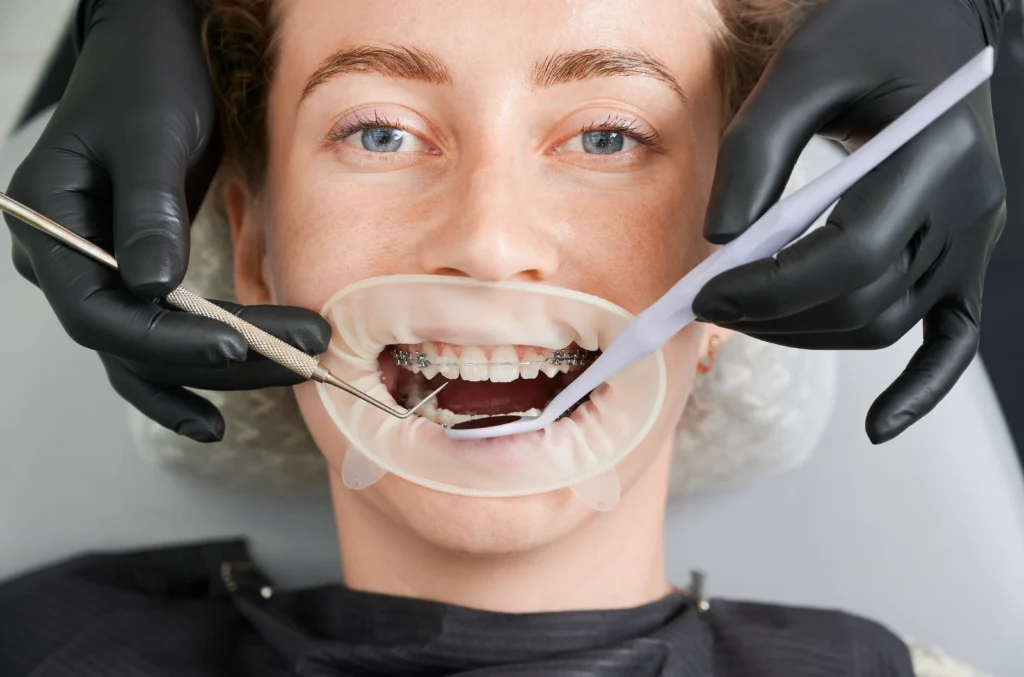
This is probably the biggest concern for many patients.
Modern root canal treatment is carried out using local anaesthetic and carefully controlled techniques.
The goal is to make treatment as comfortable as reasonably possible.
In many cases, treating the source of dental infection or inflammation can help resolve the pain that brought the patient to the dentist in the first place.
If you are particularly nervous about dental treatment, tell your dental team before your appointment. Your concerns can be discussed as part of your treatment planning.
What Happens If I Don’t Have a Root Canal?
If a tooth genuinely requires root canal treatment and the underlying problem is left untreated, the infection or inflammation may progress.
Possible complications can include:
However, this does not mean every painful tooth automatically needs a root canal.
The first step is finding out what is actually causing the problem.
If you are searching for root canal treatment in Stanmore, choosing the right dental team is particularly important when a tooth has a complicated history or the diagnosis is uncertain.
At Centre of Dental Excellence, our endodontic service focuses on the diagnosis and treatment of conditions affecting the dental pulp and supporting structures.
Our clinic is located at:
Centre of Dental Excellence
46 Church Road
Stanmore
Middlesex
HA7 4AH
We welcome patients from Stanmore, Harrow, Edgware, Bushey, Pinner, Borehamwood, Northwood, Watford and across North West London.
Our team can assess your symptoms and explain whether root canal treatment, another restorative option or a different approach is appropriate for your tooth.
Don’t wait for dental pain to become unbearable.
You should arrange a dental assessment if you experience:
If you have severe swelling, particularly around the eye or neck, or difficulty breathing, swallowing or speaking, seek urgent medical attention.
Think You Might Need a Root Canal?
A toothache doesn’t automatically mean you need root canal treatment but it does mean there may be a reason to investigate.
The sooner the cause is identified, the sooner you can understand your options.
If you’re experiencing tooth pain, sensitivity, swelling or other symptoms and are looking for root canal treatment in Stanmore, Centre of Dental Excellence can assess your tooth and discuss the most appropriate treatment options.
Centre of Dental Excellence
46 Church Road, Stanmore, Middlesex HA7 4AH
020 8420 7407
Book a consultation to find out what is really causing your tooth problem and whether your natural tooth can be preserved.