Cola Through a Straw: Better for Your Teeth? | Dentist Stanmore
Does drinking cola through a straw protect your teeth? Discover whether straws reduce contact with teeth, why sugar-free cola can still affect enamel and how to enjoy fizzy drinks more tooth-consciously.
🥤 You’ve Ordered a Cola. Then You Remember Your Teeth…
You know fizzy drinks aren’t exactly your dentist’s favourite beverage.
But you’ve heard about a clever little workaround:
“Just drink it through a straw.”
Problem solved… right? 😎
The cola bypasses your teeth.
Straight down the straw.
Your enamel never knows what happened.
Except…
That’s not quite how mouths work. 😂
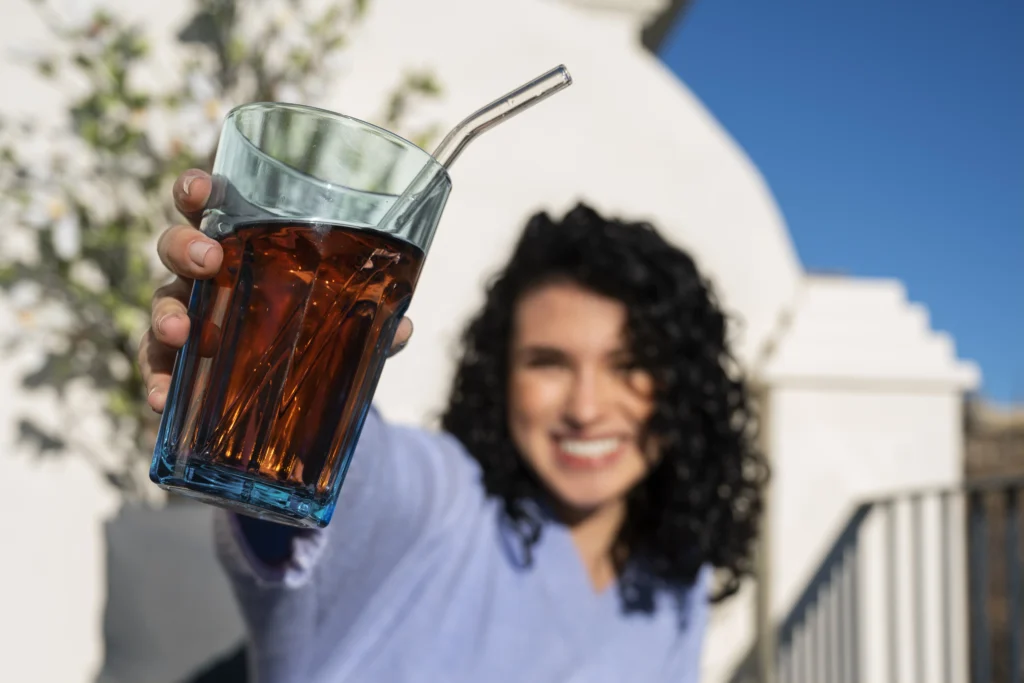
Using a straw may reduce direct contact with some teeth depending on where the straw is positioned and how you drink, but it does not magically make an acidic or sugary drink harmless.
So before you start carrying a box of emergency straws everywhere you go, let’s look at what actually happens.
There are two different dental issues to understand:
1️⃣ Tooth decay
Regular cola containing sugar can contribute to tooth decay.
Bacteria in dental plaque metabolise fermentable carbohydrates, including sugars, producing acids that can contribute to mineral loss from teeth.
Frequent sugary drinks can therefore increase decay risk.
2️⃣ Dental erosion
Cola is also acidic.
Acidic drinks can contribute to dental erosion, chemical loss of tooth surface that is not primarily caused by bacteria.
And here’s the important bit:
So removing the sugar doesn’t necessarily remove the potential issue for enamel.
🥤 So… Does a Straw Actually Help?
Potentially, to a degree.
A straw can alter where a drink enters your mouth.
If positioned appropriately, it may reduce how much of the drink washes directly across the front surfaces of your teeth compared with swishing or holding the drink around your mouth.
But there is an enormous difference between:
Using a straw to reduce some direct contact
and
Making an acidic drink “safe” for teeth.
A straw does not:
❌ Neutralise acidity
❌ Remove sugar
❌ Change the drink’s chemistry
❌ Prevent every tooth from being exposed
❌ Protect against frequent sipping
❌ Give you permission to drink cola continuously for eight hours 😄
Think of a straw as a possible exposure-reduction strategy, not an enamel force field.
Yes.
Imagine two people drinking exactly the same cola.
Person A
Places the straw towards the back of the mouth and swallows reasonably promptly.
Person B
Places the straw just behind the front teeth, takes a sip and then swishes the drink around before swallowing.
Both technically “used a straw”.
But their teeth haven’t necessarily had the same exposure.
If you’re using a straw to try to reduce contact with the teeth, the aim isn’t to spray cola directly onto them.
And definitely don’t deliberately swish an acidic drink around your mouth.
Your mouth is not a wine-tasting competition. 🍷😂
Then the drink may still contact other teeth.
This is why claims such as:
“Straws stop fizzy drinks touching your teeth.”
are too simplistic.
Your mouth is full of teeth.
There are:
🦷 Incisors
🦷 Canines
🦷 Premolars
🦷 Molars
A straw can change the route the liquid takes, but it cannot guarantee zero contact throughout the mouth.
This is arguably more important than the straw itself.
Consider these two situations:
Scenario A
You have a cola with lunch and finish it during the meal.
Scenario B
You buy a large cola at 9am and take a sip every few minutes until lunchtime.
Same drink.
Very different pattern of exposure.
Repeated sipping means your teeth are exposed to the drink again…
…and again…
…and again.
So when thinking about drinks and dental health:
A straw doesn’t solve the problem of continuously exposing your teeth to an acidic or sugary drink.

This habit is surprisingly easy to fall into.
You open a can.
Put it next to your laptop.
Take a sip.
Answer an email.
Take another sip.
Join a meeting.
Another sip.
Scroll.
Sip.
Work.
Sip.
Three hours later, the can is finally empty.
From a dental perspective, repeated exposure over a prolonged period is very different from simply having a drink as part of a meal.
So if there’s one habit worth reconsidering, it’s:
🥤➡️🕐➡️🥤➡️🕑➡️🥤➡️🕒
Constant sipping.
If you’re going to have an acidic or sugary drink, having it with a meal rather than repeatedly between meals can be a more tooth-conscious approach.
Why?
Because you’re reducing the number of separate drinking occasions throughout the day.
This is especially relevant for sugary drinks because the frequency of sugar exposure matters for dental decay.
So rather than thinking:
“I need the perfect straw.”
It may be more useful to think:
“How often am I exposing my teeth to this drink?”
This is one of the most common misunderstandings.
Sugar-free fizzy drinks remove one important concern:
Sugar.
That can make a meaningful difference in relation to tooth decay.
However:
Sugar-free does not necessarily mean acid-free.
Many diet and zero-sugar fizzy drinks remain acidic.
That means they can still be relevant when we talk about dental erosion.
So:
Regular cola
May be relevant to decay + erosion.
Sugar-free cola
May reduce the sugar-related decay concern, but acidity and erosion can still matter.
That’s why “zero sugar” and “tooth-friendly” are not interchangeable phrases.
You don’t need to turn drinking into an Olympic event. 😂
But from a dental perspective, prolonged sipping is generally something we’d prefer to reduce.
Having an acidic drink over a relatively short period, rather than repeatedly sipping it over several hours, reduces the duration of repeated exposure.
The goal isn’t:
CHUG EVERYTHING IMMEDIATELY.
The goal is simply:
Don’t bathe your teeth in it all day.
Having some plain water after an acidic or sugary drink can be a sensible habit.
Water can help clear residual drink from the mouth.
And unlike cola, plain water is an excellent choice for regular hydration throughout the day.
So if you’ve had a fizzy drink:
🥤 Finish the drink
💧 Have some plain water
😁 Then get on with your day
Simple.
🪥 Should I Brush My Teeth Straight After Drinking Cola?
This is where many people accidentally become too enthusiastic.
You’ve had something acidic.
You panic.
You grab your toothbrush.
Not necessarily.
After an acidic exposure, the tooth surface environment has temporarily changed.
A practical recommendation is to avoid brushing immediately after acidic foods or drinks.
Waiting around an hour before brushing is commonly advised.
In the meantime:
💧 Drink or rinse gently with plain water
🚫 Don’t aggressively scrub your teeth
Then brush later with fluoride toothpaste.
Please don’t put toothpaste into your cola. 😂
Your best strategy isn’t trying to chemically engineer your drink at the table.
Instead, focus on straightforward habits:
✔ Reduce frequency
✔ Avoid prolonged sipping
✔ Have acidic drinks with meals where possible
✔ Use a straw if you wish to reduce some direct contact
✔ Don’t swish
✔ Have plain water afterwards
✔ Avoid brushing immediately after acidic drinks
✔ Brush twice daily with fluoride toothpaste
Ice can dilute a drink as it melts, but adding ice does not transform cola into water.
And there’s another dental warning:
Don’t chew the ice.
Ice is hard.
Biting down on it can potentially contribute to chipped or cracked teeth, particularly if a tooth is already weakened by a large filling, restoration or existing crack.
Enjoy the cold drink.
Leave the ice cubes alone. 🧊🦷
Not a habit we’d encourage.
Holding or swishing an acidic drink increases contact between the liquid and your teeth.
If you’re drinking cola:
Sip → swallow.
Not:
Sip → swish → contemplate the flavour profile → swallow. 😂
Save the tasting ceremony for something your enamel likes more.
This is where an otherwise helpful straw can become misleading.
Imagine filling a giant tumbler with:
💧 Plain water
…and sipping it throughout the working day.
Great.
Now imagine filling the same tumbler with:
🥤 Cola
🍋 Lemon water
🧃 Juice
⚡ An energy drink
…and sipping it every five minutes for six hours.
The presence of a straw doesn’t cancel the frequency of exposure.
For something you’re going to sip constantly:
Plain water is the easiest tooth-friendly choice.
“Better” depends on what you’re comparing.
Lemon water may contain no added sugar.
But lemon is acidic.
So while it may fit perfectly well into someone’s diet or lifestyle, sipping lemon water throughout the day can still repeatedly expose teeth to acid.
This is the broader lesson:
Healthy-looking doesn’t automatically mean tooth-neutral.
We recently explored this with smoothies, kombucha, fruit juice, sports drinks and sugar-free fizzy drinks too.
Your enamel doesn’t read the marketing label.
It experiences the chemistry.
The same principle applies.
A straw may alter how the drink contacts the teeth, but fruit juice can contain:
🍊 Naturally occurring sugars
and
🍋 Acids
So again:
Straw ≠ unlimited permission.
How frequently you drink it and how long you sip it still matter.
These deserve similar consideration.
Depending on the product, they may contain:
🍬 Sugar
🧪 Acids
or both.
Even sugar-free versions may remain acidic.
If you’re exercising and simply need everyday hydration, plain water is often the straightforward choice.
Specific nutritional or sports requirements are a separate matter, but from the perspective of your teeth, don’t assume a drink is harmless because the bottle has someone running a marathon on the front. 🏃😄
The more useful question is:
How often are they having fizzy drinks at all?
A straw doesn’t turn a sugary or acidic drink into an everyday hydration drink.
For children’s teeth, keeping sugary drinks limited and encouraging water as the normal everyday drink is far more important than relying on a straw.
And remember: baby teeth matter too.
They help with:
🦷 Eating
🗣️ Speech
😁 Appearance
🦷 Maintaining space for developing adult teeth
Good habits started early can make a significant difference.
You’ve probably seen dramatic internet experiments involving teeth sitting in glasses of cola for days.
They’re eye-catching.
But they’re not a realistic recreation of what happens inside a living mouth.
Your mouth has:
💧 Saliva
🧪 Buffering mechanisms
👅 Movement
🥤 Drinks that are swallowed rather than permanently surrounding a tooth
So no, drinking one cola does not mean your tooth sits submerged in cola for three days.
However, the basic lesson behind those experiments still has relevance:
Frequent acidic exposure can contribute to dental erosion over time.
Real dentistry is more nuanced than viral science experiments.
🧬 Doesn’t Saliva Protect My Teeth?
Yes, saliva is incredibly important.
It helps:
💧 Wash substances away
🧪 Buffer acids
🦷 Support remineralisation
👄 Keep oral tissues comfortable
But saliva isn’t invincible.
If you repeatedly introduce acidic or sugary drinks throughout the day, you’re repeatedly changing the oral environment.
That’s another reason why frequency matters so much.
Let’s play.
Person A
Has one cola with lunch.
Uses a straw.
Doesn’t swish it.
Has some water afterwards.
Person B
Has a zero-sugar cola.
Uses a straw.
But sips it from 10am until 4pm.
👉 Person A.
The words “zero sugar” and “straw” don’t override six hours of repeated acidic exposure.
🚨 Signs Your Teeth May Be Experiencing Erosion
Dental erosion can develop gradually.
Possible signs can include:
🥶 Increased sensitivity
🟡 Teeth appearing more yellow as enamel becomes thinner and underlying dentine becomes more visible
✨ Smooth or shiny-looking areas
📉 Changes in tooth shape
🦷 Thinning or translucent-looking edges
🕳️ Small depressions or worn areas
🔧 Changes around existing fillings or restorations
These signs can have more than one possible cause, so don’t self-diagnose from the bathroom mirror.
A dentist can assess what is happening and whether erosion, grinding, brushing habits or another factor may be involved.
🦷 Can Eroded Enamel Grow Back?
This distinction is important.
Very early mineral changes can potentially be supported through remineralisation.
But once tooth structure has been physically lost through established erosion, your body does not simply grow the missing enamel back.
That’s why prevention matters.
Depending on severity, management may focus on:
✔ Identifying the cause
✔ Reducing further acid exposure
✔ Improving preventive habits
✔ Managing sensitivity
✔ Monitoring wear
✔ Restoring teeth where clinically necessary
The earlier a pattern is recognised, the more opportunity there may be to protect the remaining tooth structure.
We’re a dental practice.
Not the Cola Police. 🚓🥤
For many people, the realistic goal isn’t:
“Never consume anything acidic again.”
It’s understanding how habits affect teeth and making sensible choices.
If you enjoy a fizzy drink occasionally:
🍽️ Consider having it with a meal
🥤 A straw may help reduce contact with some teeth if used sensibly
🚫 Don’t swish it around
⏱️ Avoid sipping it for hours
💧 Have some plain water afterwards
🪥 Don’t brush immediately afterwards
🦷 Maintain good fluoride toothpaste use
It’s the overall pattern that matters.
🪥 And Don’t Forget the Basics
You can own the world’s most sophisticated reusable straw…
…but it won’t compensate for never brushing your teeth. 😄
For most adults:
🪥 Brush at least twice daily
🌙 Make one brushing session last thing at night
🦷 Use fluoride toothpaste containing around 1,350–1,500 ppm fluoride
⏱️ Brush thoroughly for around two minutes
😗 Spit rather than immediately rinsing with water
🧵 Clean between your teeth as appropriate
💧 Make plain water your normal everyday drink
Those habits matter far more than searching for a magical cola loophole.
🥤 So… Can You Drink Cola Through a Straw and Save Your Teeth?
Here’s the verdict.
A straw may help reduce direct contact with some tooth surfaces but it does not make cola harmless.
The bigger factors include:
🥤 What you’re drinking
Is it sugary, acidic or both?
⏰ How often you’re drinking it
Occasionally or repeatedly throughout the day?
🐌 How long you’re sipping it
Ten minutes or six hours?
👄 What you do with it
Swallowing promptly or swishing it around?
🪥 Your overall dental routine
Fluoride toothpaste? Effective brushing? Regular dental care?
A straw can be one small part of the picture.
It isn’t a force field for your enamel.
Does drinking cola through a straw protect your teeth?
It may reduce direct contact with some tooth surfaces depending on how the straw is positioned and how you drink, but it cannot prevent all exposure or make an acidic or sugary drink harmless.
Is drinking fizzy drinks through a straw better for your teeth?
Potentially in terms of reducing contact with certain teeth, but frequency, acidity, sugar content and drinking habits remain important.
Is Diet Coke or Coke Zero bad for your teeth?
Sugar-free cola removes the sugar-related concern associated with regular cola, but sugar-free fizzy drinks can still be acidic and may contribute to dental erosion with frequent exposure.
Should the straw go behind my teeth?
If you’re using a straw to reduce direct contact, positioning it so the drink isn’t directed over the front teeth may help. However, this does not guarantee that other teeth won’t be exposed.
Should I rinse with water after drinking cola?
Having plain water afterwards can help clear residual drink from the mouth and is a sensible everyday habit.
Can I brush immediately after drinking cola?
It is generally sensible not to brush immediately after an acidic drink. Waiting around an hour before brushing is a practical rule.
Is it better to drink cola quickly or sip it slowly?
Repeated sipping over a long period increases the frequency and duration of exposure. From a dental perspective, avoiding prolonged sipping is sensible.
Is sugar-free cola safe for enamel?
Not necessarily. Sugar-free does not mean acid-free, so dental erosion may still be a consideration.
Does using two straws protect my teeth twice as much?
No. 😂
That’s not how dentistry works.
What’s the best drink to sip throughout the day?
For everyday hydration and prolonged sipping:
💧 Plain water wins.
🥤 The Bottom Line
So you’ve discovered the ultimate dental hack:
Cola + straw = completely protected teeth?
Sadly, no.
A straw may reduce contact with some teeth, but it cannot change what’s inside your drink.
The much bigger win is paying attention to:
✔ Frequency
✔ Duration
✔ Sugar
✔ Acidity
✔ Drinking habits
✔ Your overall oral hygiene
If you’re going to have a fizzy drink, enjoy it, but don’t let one can become an all-day event.
And if you’re worried that acidic drinks may already be affecting your enamel, sensitivity or tooth appearance, get it checked.
🦷 Worried About Tooth Wear or Sensitive Teeth?
At Centre of Dental Excellence in Stanmore, we can assess your teeth for signs of dental erosion, decay, sensitivity and tooth wear and provide advice tailored to your habits and oral health.
We welcome patients from:
📍 Stanmore
📍 Harrow
📍 Edgware
📍 Bushey
📍 Pinner
📍 Borehamwood
📍 Northwood
📍 Watford
📍 North West London
Centre of Dental Excellence
46 Church Road
Stanmore, Middlesex
HA7 4AH
📞 020 8420 7407
👉 Book your dental examination if you’ve noticed increasing sensitivity, thinning tooth edges or changes in the appearance of your teeth.