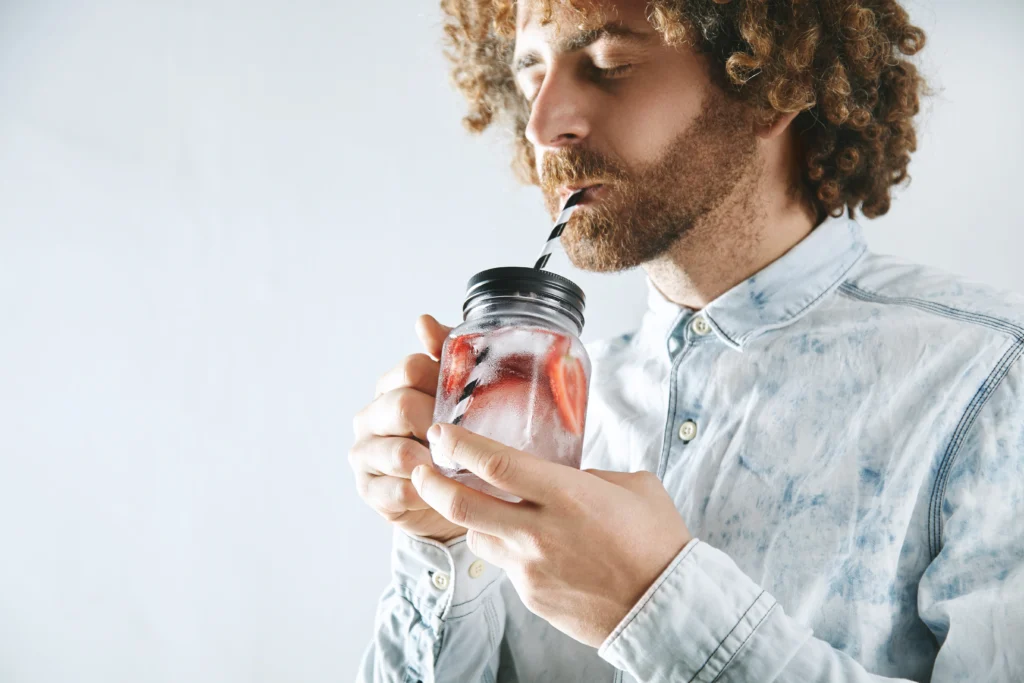
Could smoothies, lemon water, kombucha, fruit juice, sports drinks and sugar-free fizzy drinks damage your teeth? Discover how acidity and sugar can affect enamel and how to protect your smile.
You’ve swapped fizzy drinks for smoothies.
You start the morning with warm lemon water. 🍋
You choose kombucha instead of cola.
You grab a sports drink after the gym. 🏃
And when you do fancy something fizzy, you choose the sugar-free version.
Sounds pretty tooth-friendly, right?
Not necessarily.
Some drinks marketed or simply perceived as healthier choices can still expose your teeth to sugar, acidity or both.
And here’s where it gets confusing:
A drink can fit into a healthy lifestyle and still have potential consequences for your teeth.
That doesn’t mean you need to throw away your smoothie maker.
It means understanding what you’re drinking, how often you’re drinking it and how you look after your teeth afterwards.
At Centre of Dental Excellence in Stanmore, dietary habits are one of the things we may discuss when assessing tooth decay, sensitivity and dental erosion.
So let’s look at some of the drinks your body might appreciate more than your enamel does.
Your teeth are incredibly strong, but they’re not indestructible.
The outer layer of the tooth, enamel can be affected by repeated exposure to acids.
Dental erosion is the gradual loss of tooth surface caused by acids that are not primarily produced by plaque bacteria.
These acids may come from foods and drinks.
Repeated acidic exposure can contribute to changes such as:
🦷 Thinning enamel
🥶 Increased sensitivity
🟡 Teeth appearing more yellow as underlying dentine becomes more visible
✨ Changes to the surface or shape of teeth
📉 Loss of tooth structure
And unlike hair or nails:
Lost enamel doesn’t simply grow back.
That’s why prevention matters.
This distinction is important.
🦠 Tooth Decay
Dental decay involves bacteria in dental plaque metabolising sugars and other fermentable carbohydrates.
The acids produced can cause minerals to be lost from teeth and, over time, cavities may develop.
🍋 Dental Erosion
Dental erosion involves direct acid exposure to the teeth.
That acid may come from:
🍊 Fruit juice
🥤 Fizzy drinks
🍋 Citrus drinks
🍹 Some smoothies
or other sources.
So a drink can potentially affect teeth in two different ways:
Sugar can contribute to decay.
Acidity can contribute to erosion.
And some drinks contain both.
Let’s start with one of the biggest wellness trends.
A glass of warm water with fresh lemon is a popular morning ritual.
But from a dental perspective, adding lemon changes something important:
It makes the drink acidic.
If lemon water is something you enjoy occasionally, there’s no need to panic.
The bigger concern is repeated exposure.
For example:
🍋 Lemon water first thing
🍋 Another bottle at your desk
🍋 Sipping it throughout the morning
🍋 More lemon water with lunch
This can keep exposing the teeth to acid.
How can I make lemon water kinder to my teeth?
Consider:
✔ Drinking it rather than repeatedly sipping it for hours
✔ Avoiding swishing it around your mouth
✔ Drinking plain water afterwards
✔ Not brushing immediately after an acidic drink
And remember:
Plain water doesn’t need lemon to be healthy.
💧 Your teeth are perfectly happy with the original version.

Smoothies have an incredible health halo.
Fruit.
Vegetables.
Protein.
Seeds.
Yoghurt.
Surely that’s good news?
Nutritionally, smoothies can contain useful ingredients.
But from a dental perspective, some fruit-based smoothies may also contain:
🍓 Naturally occurring sugars
🍊 Fruit acids
🍍 Acidic fruits
🍯 Added sweeteners
🥤 Fruit juice
Again, the issue isn’t necessarily having a smoothie.
It’s how you consume it.
A smoothie finished with breakfast is very different from a large bottle that you sip every ten minutes from 8am until lunchtime.
Your teeth generally cope better when eating and drinking episodes are limited rather than happening constantly.
Imagine:
Person A
Has a smoothie with breakfast and finishes it.
Person B
Keeps a smoothie beside their laptop and takes a sip every few minutes for three hours.
Person B is repeatedly exposing their teeth to the drink.
This is why one of the most useful dental messages isn’t simply:
“Never drink this.”
It’s:
Think about frequency.
How often your teeth are exposed can matter enormously.
Fruit juice is another classic example.
The packaging may say:
🍊 100% fruit
🌱 Natural
🚫 No added sugar
But “no added sugar” does not mean “no sugar.”
Fruit juice can contain naturally occurring sugars and can also be acidic.
That doesn’t mean fruit itself should be feared.
Whole fruit and fruit juice are not identical from a dental or nutritional perspective.
When possible, choosing whole fruit rather than regularly drinking fruit juice can reduce the tendency to bathe the teeth in sugary, acidic liquid.
If you do drink juice, keeping it to mealtimes rather than repeatedly sipping it throughout the day can be a more tooth-conscious approach.
Kombucha has become hugely popular.
It’s fermented.
It’s fashionable.
It sits in the “wellness” section of the fridge.
But your enamel doesn’t read marketing labels.
Kombucha is typically acidic, and sugar content can vary considerably between products.
Some versions may contain more sugar than consumers expect.
So if kombucha is part of your routine:
🔍 Check the nutritional label
🍬 Look at the sugar content
⏰ Avoid sipping it continuously over long periods
💧 Have some plain water afterwards
🪥 Avoid brushing immediately after an acidic drink
Enjoying kombucha doesn’t automatically mean you’re damaging your teeth.
But treating it like water and sipping it throughout the entire day may not be ideal.

You’ve just finished a workout.
You’re sweaty.
You’ve worked hard.
Surely a sports drink is exactly what your body needs?
Sometimes sports drinks have a specific role particularly depending on the type, duration and intensity of exercise.
But many people drink them casually without considering their teeth.
Sports drinks may be:
🍬 Sugary
🍋 Acidic
or both.
If you’re exercising recreationally for a relatively short period, plain water may often be sufficient for hydration.
If you regularly use sports drinks as part of endurance training or for a particular nutritional reason, think about how frequently your teeth are being exposed.
Energy drinks aren’t necessarily marketed as health drinks, but they often become part of gym, work or study routines.
Some contain substantial amounts of sugar.
Sugar-free versions remove that particular concern but may still be acidic.
Frequent consumption can therefore still be relevant to dental erosion.
And the pattern matters.
An energy drink consumed quickly is one thing.
A can opened at 9am and sipped until midday means repeated exposure over several hours.
This one surprises many patients.
You switched from regular cola to the sugar-free version.
From a tooth decay perspective, removing sugar is certainly relevant.
But:
Sugar-free doesn’t necessarily mean acid-free.
Many fizzy drinks remain acidic even when they contain no sugar.
That means frequent consumption may still contribute to dental erosion.
So:
Sugar-free can be better in one respect without making the drink completely harmless to teeth.
“It says water on the bottle!”
Yes but check what else is in it.
Some flavoured waters may contain:
🍋 Acids
🍓 Fruit flavourings
🍬 Sugar or sweeteners
Not all flavoured waters are the same.
Read the label rather than assuming every product with the word “water” has the same dental impact as plain water.
For everyday hydration:
💧 Plain water remains difficult to beat.
🥥 9. Coconut Water
Coconut water is another drink often associated with fitness and wellness.
Products vary.
Some contain naturally occurring sugars, and flavoured versions may contain additional ingredients.
This doesn’t mean coconut water is “bad”.
It simply means:
Don’t assume that a health-focused label makes a drink irrelevant to your teeth.
Check the nutritional information and think about how often you’re drinking it.
Protein shakes have become part of everyday life for many gym-goers.
But the ingredients vary enormously.
Depending on the product and what you add, a shake may contain:
🥛 Milk
🍌 Banana
🍓 Fruit
🍯 Sweeteners
🥤 Flavoured powders
🍫 Added sugars
Again, the dental impact depends on the ingredients and your drinking habits.
If you’re carrying a protein shake around all morning and taking frequent sips, your teeth may be exposed repeatedly.
Finishing it around your workout or with a meal and then having some water can be a simpler approach.

This is one of the most common misunderstandings.
People often think:
“It’s fruit sugar, so surely my teeth don’t care?”
Unfortunately, bacteria in dental plaque aren’t interested in whether the packaging says:
🌱 Natural
🍃 Organic
✨ Cold pressed
💚 Wellness
From a dental perspective, sugars can still be relevant.
This doesn’t mean fruit is unhealthy.
It means whole fruit and frequently bathing your teeth in sugary fruit drinks aren’t the same thing.
🍯 What About Honey and Agave?
Honey, agave syrup and other alternatives are sometimes used instead of table sugar because they’re perceived as more natural.
But from the perspective of dental decay:
“Natural” sweetener doesn’t mean “tooth-safe” sweetener.
If you’re regularly adding honey or syrup to:
☕ Tea
🥤 Smoothies
🥣 Breakfast drinks
🍵 Wellness drinks
…it still contributes to your overall sugar exposure.
A straw may help reduce direct contact between certain drinks and some tooth surfaces if used appropriately, but it doesn’t make an acidic or sugary drink harmless.
If you’re using one:
✔ Position it so the drink isn’t deliberately swished around your teeth
✔ Don’t use the straw as an excuse to sip an acidic drink all day
✔ Remember that frequency still matters
A straw can modify exposure.
It cannot change the chemistry of the drink.
This is where many people make a well-intentioned mistake.
You finish your smoothie and think:
“That was fruity and sugary I’d better brush immediately.”
But if the drink was acidic, rushing straight into brushing may not be ideal.
A practical approach is:
💧 Have some water
🚰 Rinse your mouth with plain water if you wish
⏰ Allow some time before brushing
🪥 Then brush gently with fluoride toothpaste
If you’ve consumed something particularly acidic, waiting around an hour before brushing is a useful practical rule.
Then you don’t need to brush again immediately.
If you:
🪥 Brush when you wake up
🍓 Have a smoothie with breakfast
💧 Drink some water afterwards
…you can simply continue with your day.
For most people, effective brushing twice daily with fluoride toothpaste is the foundation, not brushing after every drink.
Plain water is a simple option after an acidic drink.
It can help clear some of the drink from the mouth without adding another acidic or sugary exposure.
And unlike the latest wellness drink:
💧 Water doesn’t need a marketing department.
Saliva plays an important role in helping neutralise acids in the mouth.
This is one reason why having acidic drinks with meals can often be preferable to sipping them independently throughout the day.
Some foods consumed as part of a balanced meal may also be less challenging to the teeth than repeatedly consuming acidic drinks alone.
The overall pattern matters more than obsessing over one ingredient.
Dental erosion can develop gradually.
Possible signs may include:
🥶 Increased sensitivity
🟡 Teeth looking more yellow
✨ Teeth appearing smoother or shinier in some areas
🦷 Changes in tooth shape
📉 Thinning edges of front teeth
🕳️ Small depressions or worn areas on chewing surfaces
😬 Changes around existing fillings as surrounding tooth structure wears
These changes can have other causes too.
So don’t try to diagnose erosion by looking in the mirror.
A dental examination is the appropriate way to assess what’s happening.
Enamel is relatively translucent.
Underneath it is dentine, which naturally has a more yellow appearance.
As enamel becomes thinner, more of the underlying dentine can show through.
This means a tooth may appear more yellow even though the issue isn’t simply surface staining.
That’s important because:
Whitening and tooth wear are two very different problems.
If you’re concerned about the colour of your teeth, it’s worth understanding why they’ve changed before choosing a cosmetic treatment.
Tooth sensitivity has many possible causes.
But when enamel becomes worn or dentine becomes exposed, sensitivity can occur.
You might notice a short, sharp sensation when consuming:
🧊 Cold water
🍦 Ice cream
🍊 Acidic drinks
🍬 Sweet foods
If sensitivity is new, persistent or getting worse, arrange a dental assessment rather than simply switching toothpaste and hoping for the best.
Once enamel has been physically lost, your body cannot simply regenerate the missing tooth structure.
However, very early mineral changes at the tooth surface are different from established physical tooth wear, and preventive measures can help protect the remaining tooth structure.
Depending on your situation, advice may involve:
✔ Fluoride toothpaste
✔ Dietary changes
✔ Reducing acidic exposures
✔ Managing sensitivity
✔ Monitoring tooth wear
✔ Restorative treatment if significant damage has occurred
Prevention is therefore much easier than trying to replace lost tooth structure later.
Both matter.
But frequency is extremely important.
Consider the difference:
Scenario 1
You have a small glass of fruit juice with breakfast.
Scenario 2
You fill a large bottle with lemon water and sip it every few minutes for eight hours.
Even if each individual sip seems insignificant, your teeth are being exposed repeatedly.
The same principle applies to:
🥤 Fizzy drinks
🍹 Kombucha
🍓 Smoothies
☕ Sweetened coffee
🏃 Sports drinks
⚡ Energy drinks
The healthiest dental habit isn’t necessarily finding a magical drink.
Sometimes it’s simply giving your teeth a break between exposures.
Modern drinking habits have changed.
We carry bottles everywhere.
We work with drinks beside our laptops.
We drive with giant reusable cups.
We sip while exercising.
We sip while watching television.
The bottle itself isn’t the problem.
The question is:
What’s inside it?
If it’s plain water fantastic. 💧
If it’s an acidic drink you’re sipping every few minutes from morning until evening, that may be worth reconsidering.
We’re not here to make you afraid of breakfast.
Or smoothies.
Or lemons.
Or the gym.
The goal is sensible moderation.
Try these simple habits:
✔ 1. Make plain water your default everyday drink
Keep other drinks as additions rather than constant hydration.
✔ 2. Avoid sipping acidic drinks for hours
Finish them rather than continuously exposing your teeth.
✔ 3. Have juice or smoothies with meals where possible
Instead of repeatedly drinking them between meals.
✔ 4. Drink some plain water afterwards
Simple and easy.
✔ 5. Don’t brush immediately after acidic drinks
Allow some time before brushing.
✔ 6. Brush twice daily with fluoride toothpaste
And spit rather than immediately rinsing all the toothpaste away.
✔ 7. Check labels
Particularly for sugar content.
✔ 8. Don’t assume “natural”, “organic” or “sugar-free” means tooth-friendly
Marketing language and dental chemistry aren’t the same thing.
✔ 9. Mention sensitivity or tooth wear to your dentist
Earlier assessment may help prevent further damage.
This is the main message.
Nutrition is complex.
Dentistry is complex.
A drink doesn’t have to be categorised as:
❌ Bad
or
✅ Good.
A smoothie may contain valuable nutrients while also exposing teeth to sugars and acids.
A sports drink may be useful in certain athletic circumstances while still being relevant to dental health.
A sugar-free fizzy drink may avoid sugar while remaining acidic.
Understanding these trade-offs lets you make informed decisions without unnecessary restrictions.
You’re sitting at your desk for the next four hours.
Which drink would generally be the most tooth-friendly choice to sip regularly?
A) Lemon water 🍋
B) Fruit smoothie 🍓
C) Sugar-free fizzy drink 🥤
D) Plain water 💧
The answer?
💧 D) Plain water.
Sometimes boring wins. 😄
Is lemon water bad for your teeth?
Lemon water is acidic, so frequent exposure may contribute to dental erosion. If you enjoy it, avoid repeatedly sipping it over long periods, consider drinking plain water afterwards and don’t brush immediately after consuming it.
Are smoothies bad for your teeth?
Smoothies aren’t automatically “bad”, but fruit-based versions can contain naturally occurring sugars and acids. How frequently you drink them and how long your teeth are exposed can make a difference.
Is kombucha bad for teeth?
Kombucha is generally acidic, and sugar content varies between products. Check the label and avoid treating it like plain water that you sip continuously throughout the day.
Are sugar-free fizzy drinks safe for teeth?
Removing sugar reduces one concern, but many sugar-free fizzy drinks remain acidic. Frequent consumption may therefore still be relevant to dental erosion.
Is fruit juice bad for teeth?
Fruit juice can contain both naturally occurring sugars and acids. Keeping juice to mealtimes and avoiding frequent sipping can help reduce repeated exposure.
Are sports drinks bad for teeth?
Many sports drinks contain sugar, acids or both. Their impact depends on the product and how frequently they’re consumed.
Should I brush after drinking a smoothie?
Avoid brushing immediately after an acidic smoothie. Have some water and allow time before brushing; around an hour is a useful practical rule after acidic foods or drinks.
Can acidic drinks cause yellow teeth?
If repeated acid exposure contributes to enamel thinning, the naturally yellower dentine underneath may become more visible. Yellow-looking teeth can have many other causes, however, so a dental assessment can help identify the reason.
Can enamel grow back?
Lost enamel does not simply grow back. Preventive measures can help protect remaining tooth structure and manage very early mineral changes before physical tooth loss occurs.
What’s the best drink for my teeth?
For frequent everyday hydration, plain water is an excellent choice.
🥤 The Bottom Line
Your smoothie isn’t the enemy.
Neither is the occasional glass of juice.
And you don’t need to panic every time someone puts a slice of lemon in your water.
The important things to think about are:
🍬 How much sugar is in the drink?
🍋 How acidic is it?
⏰ How often are your teeth exposed?
🥤 Are you sipping it for hours?
🪥 What do you do afterwards?
Small changes can make a big difference.
Swap constant acidic sipping for plain water.
Keep sugary or acidic drinks closer to mealtimes.
Don’t rush to brush immediately afterwards.
And if you’re already noticing sensitivity, thinning teeth or changes in your smile, have them assessed.
Because sometimes the drink with the healthiest-looking label isn’t necessarily the one your enamel would choose.
At Centre of Dental Excellence in Stanmore, we can assess your teeth for signs of dental erosion, decay, sensitivity and tooth wear and provide personalised preventive advice.
Your care may include:
✔ Comprehensive dental examination
✔ Assessment of tooth wear and erosion
✔ Dietary advice
✔ Dental hygiene
✔ Fluoride and preventive advice where appropriate
✔ Sensitivity management
✔ Restorative dentistry where required
✔ Cosmetic advice where appropriate
We welcome patients from:
📍 Stanmore
📍 Harrow
📍 Edgware
📍 Pinner
📍 Bushey
📍 Borehamwood
📍 Northwood
📍 Watford
📍 North West London
📞 Is Your “Healthy” Habit Affecting Your Smile?
Centre of Dental Excellence
46 Church Road
Stanmore, Middlesex
HA7 4AH
📞 020 8420 7407
If you’ve noticed sensitivity, tooth wear, changes in colour or you’re simply unsure whether your daily drinks are affecting your teeth, book a dental examination for personalised advice.