

A persistent toothache can be worrying, particularly when you start wondering whether the tooth might need to be extracted.
But in many situations, root canal treatment may allow an infected or damaged tooth to be treated and retained rather than removed.
Also known as endodontic treatment, root canal treatment focuses on treating problems affecting the soft tissue, or pulp, inside the tooth.
At Centre of Dental Excellence in Stanmore, our dental team provides endodontic and restorative care for patients experiencing tooth pain, infection, deep decay, dental trauma and other problems affecting the inside of a tooth.
And if treatment is recommended, root canal treatment can be spread from £95 per month, subject to terms and conditions and finance eligibility.
Endodontics is the area of dentistry concerned with the inside of the tooth, particularly the dental pulp and the tissues surrounding the roots.
The pulp contains nerves and blood vessels. If it becomes inflamed or infected, treatment may be required to prevent the problem from progressing.
Root canal treatment involves removing infected or damaged pulp, carefully cleaning and shaping the inside of the tooth, and then sealing it to help prevent further infection.
The NHS explains that root canal treatment is used to remove infection from inside a tooth and then clean and seal the tooth.
The aim is generally to preserve the natural tooth wherever it can be predictably treated.
There are several reasons the pulp inside a tooth can become infected or significantly damaged.
Common causes include:
🦷 Deep Tooth Decay
When decay progresses deeply into a tooth, it can eventually reach the pulp.
At this stage, a simple filling may no longer be sufficient.
The NHS notes that if tooth decay reaches the pulp in the centre of the tooth, root canal treatment may be required.
💥 A Cracked or Broken Tooth
A crack or fracture can allow bacteria to reach the inner part of the tooth.
Depending on the extent and location of the damage, root canal treatment may be part of the treatment needed to preserve the tooth.
🦠 Dental Infection or Abscess
An infection inside the tooth can result in an abscess or swelling around the tooth.
Root canal treatment can remove the infected pulp and allow the inside of the tooth to be cleaned and sealed.
🦷 Previous Extensive Dental Treatment
A tooth that has undergone significant dental work may sometimes develop problems with its pulp.
Your dentist can assess the tooth and determine whether endodontic treatment is appropriate.
🏉 Dental Trauma
An injury or blow to a tooth can damage the pulp even if the tooth does not immediately appear severely broken.
This can happen following sports injuries, falls, accidents or other trauma.
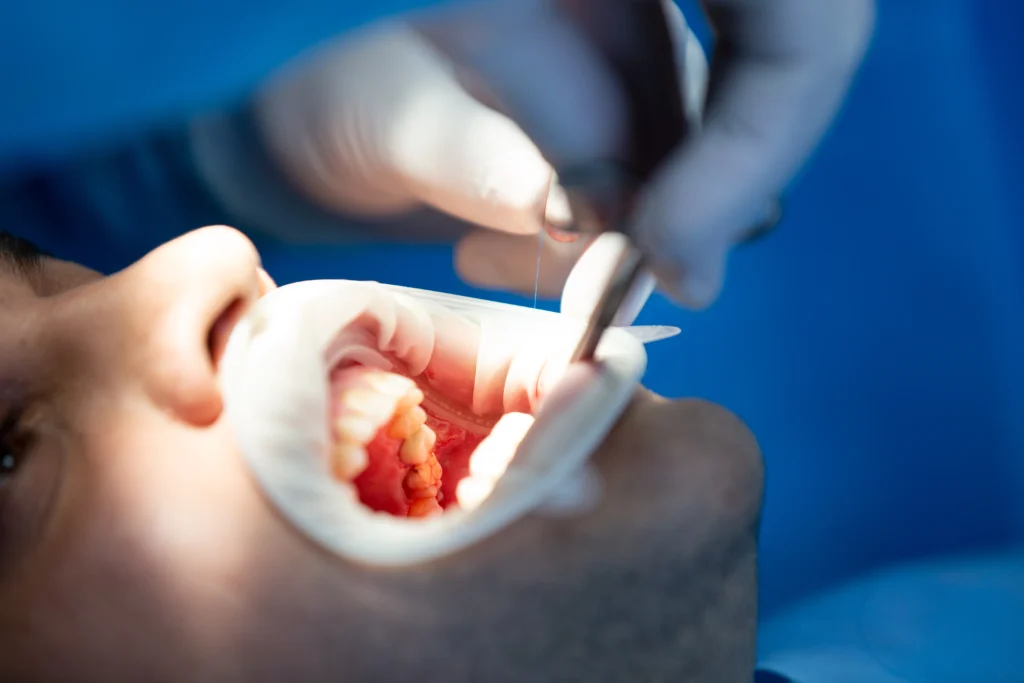
Symptoms can vary considerably between patients.
You should arrange a dental assessment if you experience symptoms such as:
1. Persistent Toothache
A tooth that keeps hurting, particularly without an obvious trigger, should be assessed.
2. Pain When Biting or Chewing
Pain when you put pressure on a particular tooth can have several possible causes, including problems involving the pulp or tissues around the root.
It does not automatically mean you need root canal treatment, but it is a symptom worth investigating.
3. Lingering Sensitivity to Hot or Cold
Brief sensitivity can have several causes.
However, if pain from hot or cold lingers after the stimulus has gone, it may indicate that the pulp is irritated or damaged.
4. Pain That Starts Without Warning
A tooth that begins hurting spontaneously, rather than only when you eat or drink something, deserves attention.
5. Swelling Around the Tooth
Swelling around a tooth or gum may be associated with infection and should be assessed promptly.
6. A Small Lump or Pimple on the Gum
A recurring spot or small swelling on the gum near a tooth can sometimes be associated with an infection originating from the tooth.
7. A Darkened or Discoloured Tooth
A tooth that becomes noticeably darker than neighbouring teeth can sometimes indicate previous trauma or changes within the tooth.
8. A Cracked or Severely Damaged Tooth
A damaged tooth may expose or compromise the pulp.
Depending on the extent of the damage, root canal treatment may form part of a plan to restore the tooth.
9. A Dental Abscess
An abscess can be associated with infection around a tooth or in the surrounding tissues.
If you have facial swelling, significant pain, fever or difficulty swallowing or breathing, urgent medical or dental attention may be required.
Yes.
Not every tooth requiring root canal treatment produces severe or constant pain.
A tooth may have an underlying infection or damaged pulp without causing dramatic symptoms.
This is one reason why a dental examination is important if you notice a change in a tooth, particularly after previous trauma, extensive decay or dental treatment.
Your dentist may use clinical examination, dental X-rays and other appropriate diagnostic tests to determine what is happening.
When a tooth has a severely damaged or infected pulp, patients sometimes assume extraction is the only option.
That isn’t necessarily the case.
Depending on the condition of the tooth, root canal treatment may allow the natural tooth to be retained.
The NHS notes that if an infected tooth is not treated with root canal treatment, extraction may ultimately be necessary.
Whether a tooth can be saved depends on factors including:
Your dentist can assess these factors before recommending treatment.
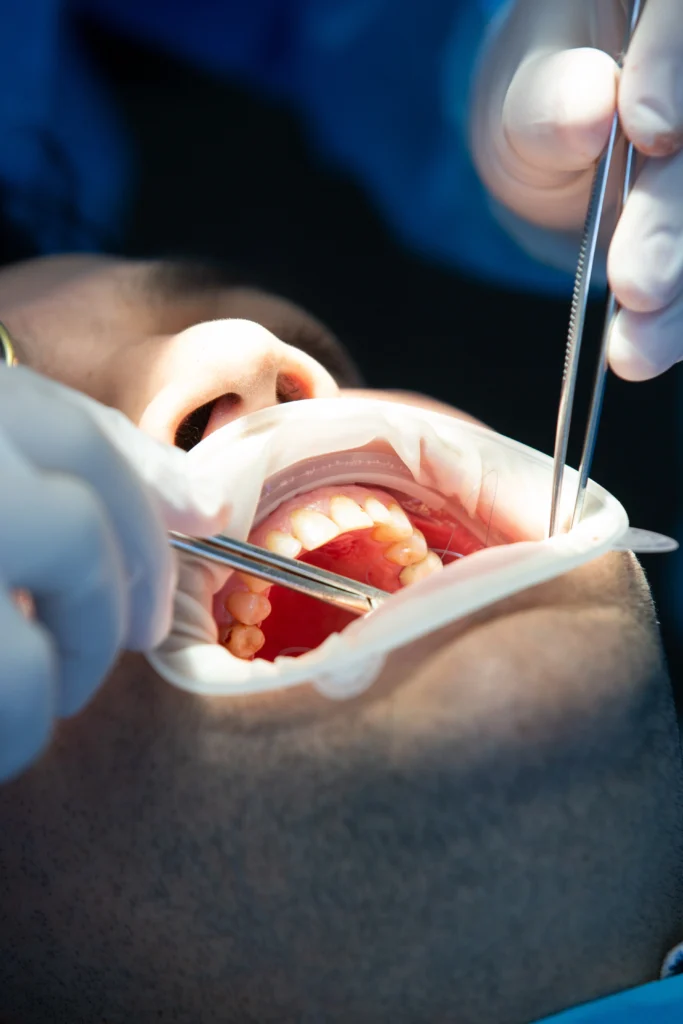
The exact treatment plan depends on your individual tooth, but root canal treatment generally involves several stages.
Step 1: Assessment
Your dentist examines the tooth and discusses your symptoms.
Dental X-rays and other diagnostic tests may be used where appropriate.
Step 2: Local Anaesthetic
The tooth is numbed with local anaesthetic before treatment.
The NHS states that local anaesthetic is usually given for root canal treatment.
Step 3: Accessing the Inside of the Tooth
A small opening is made in the tooth to allow the dentist to access the pulp chamber and root canals.
Step 4: Removing the Damaged or Infected Pulp
The affected pulp tissue is removed from inside the tooth.
Step 5: Cleaning and Shaping the Canals
The internal spaces are carefully cleaned and shaped so they can be properly sealed.
Step 6: Sealing the Tooth
The cleaned root canal system is filled and sealed to help prevent bacteria from entering again.
Step 7: Restoring the Tooth
The tooth will need an appropriate final restoration.
Depending on the amount of tooth remaining and its location, this could involve a filling, onlay, crown or another restorative solution.
A crown may be recommended for a tooth that has been significantly weakened or badly affected by infection.
The number of appointments varies according to the tooth and the complexity of the case.
Some treatments can be completed relatively quickly, while more complex cases may require multiple appointments.
The NHS notes that root canal treatment commonly takes two or more appointments, although this varies between cases.
Your dentist will explain the expected treatment sequence after assessing your tooth.
Does Root Canal Treatment Hurt?
The purpose of local anaesthetic is to numb the tooth and surrounding area during treatment.
You should discuss any concerns about discomfort, dental anxiety or previous difficult dental experiences with your dentist before treatment.
After treatment, it is possible for the area around the tooth to feel tender or sore for a period while it settles. The NHS notes that swelling or soreness can occur after root canal treatment and should improve over time.
It can be tempting to wait if your toothache disappears.
However, the disappearance of pain does not necessarily mean that the underlying problem has resolved.
An untreated infection can progress and may eventually result in an abscess or the need for extraction.
The NHS advises that an infected tooth that does not receive appropriate root canal treatment may ultimately need to be removed.
If you have symptoms that suggest a dental infection, it is better to have the tooth assessed rather than simply waiting for the symptoms to return.
In suitable cases, this is one of the main purposes of root canal treatment.
Rather than removing the entire tooth, endodontic treatment treats the infected or damaged internal tissue while retaining the tooth itself.
The tooth can then be restored so that it can continue to function.
However, not every tooth can be saved.
The dentist needs to assess the structure and condition of the tooth before determining whether root canal treatment is appropriate.
Looking after the treated tooth remains important.
Depending on the restoration provided, your dentist may recommend:
Good oral hygiene is also important for protecting the treated tooth and your remaining teeth.
Remember that root canal treatment treats the inside of a particular toot it does not make the tooth immune to future decay, gum disease or other dental problems.
Don’t Ignore a Tooth That Keeps Hurting
Tooth pain is your body’s way of telling you that something may need attention.
While not every toothache means you need root canal treatment, persistent pain, prolonged sensitivity, swelling, pain when biting or a damaged tooth should not simply be ignored.
An early assessment can help identify the cause and determine whether the tooth can be treated with a filling, root canal treatment, restorative treatment or another approach.
At Centre of Dental Excellence in Stanmore, our team can assess your symptoms and explain your treatment options.
🦷 Root Canal Treatment From £95 Per Month
Subject to terms and conditions and finance eligibility.
📍 Centre of Dental Excellence
46 Church Road
Stanmore, Middlesex
HA7 4AH
📞 020 8420 7407
Serving Stanmore, Harrow, Edgware, Bushey, Pinner, Borehamwood, Northwood, Watford and North West London.