Should I Brush My Teeth Before or After Breakfast?
The Morning Brushing Question Almost Everyone Has Asked
Should you brush your teeth before or after breakfast? Discover why brushing before breakfast is often recommended, what acidic foods do to enamel and how long to wait if you prefer brushing afterwards.
It’s one of those surprisingly controversial morning questions.
You wake up.
Do you:
A) Head straight to the bathroom and brush your teeth? 🪥
or
B) Have breakfast and coffee first, then brush everything away afterwards? ☕🥐
At first glance, brushing after breakfast seems to make perfect sense.
After all, you’ve just eaten. Surely that’s exactly when your teeth need cleaning?
But there’s an important detail many people don’t realise:
Brushing immediately after certain breakfasts, particularly acidic foods and drinks, may not be the best thing for your enamel.
So, what’s the right order?
Let’s settle the before-or-after-breakfast debate.
For many people, brushing before breakfast is a simple and sensible morning routine.
It means you can:
✔ Remove plaque that has accumulated overnight
✔ Brush with fluoride toothpaste before eating
✔ Avoid the temptation to brush immediately after acidic foods or drinks
✔ Get your morning brushing done before the day becomes busy
If you prefer to brush after breakfast, that can still be part of a good oral hygiene routine.
The important point is:
⏰ Don’t rush straight from an acidic breakfast to vigorous brushing.
Allow some time after acidic foods and drinks before brushing.
This is a common question.
You brushed before bed.
You haven’t eaten anything while sleeping.
So why brush again before breakfast?
Because your mouth hasn’t been inactive overnight.
Dental plaque, a biofilm containing bacteria, continues to accumulate on the teeth.
Saliva production also naturally decreases while you’re asleep.
That’s part of the reason your mouth can feel:
😷 Stale
👅 Furry
🏜️ Dry
…when you wake up.
Morning brushing removes plaque from the tooth surfaces and delivers fluoride from your toothpaste.
Fluoride is an important part of protecting teeth against dental decay.
Brushing with fluoride toothpaste helps deliver fluoride directly to the surfaces of your teeth.
For most people, the key routine is:
🪥 Brush twice a day with fluoride toothpaste.
One of those occasions should be last thing at night.
The other can fit into your morning routine.
The answer is acid.
Many popular breakfast foods and drinks can be acidic.
For example:
🍊 Orange juice
🍋 Citrus fruits
🍓 Some fruits
🥤 Fruit juices
🥤 Smoothies
🍋 Lemon water
☕ Certain drinks and breakfast combinations may also contribute to an acidic environment
Acids can temporarily affect the mineral balance at the surface of your teeth.
Brushing immediately after an acidic exposure may add mechanical wear at a time when the tooth surface has recently been exposed to acid.
That’s why it can be sensible to allow time for saliva to help neutralise acids before brushing.
Morning coffee deserves its own section because, for many people, coffee is breakfast. 😄
Coffee can contribute to staining over time, particularly if consumed regularly.
Adding sugar or flavoured syrups also introduces additional sugar exposure.
You don’t need to run to the bathroom and scrub your teeth immediately after every cup.
Instead:
✔ Brush effectively as part of your normal twice-daily routine
✔ Drink water after coffee if you wish
✔ Keep sugary additions and frequent sipping in mind
✔ Attend hygiene appointments as recommended if staining builds up
Brushing harder won’t remove all staining and excessive brushing pressure can cause other problems.
🥤 Are Smoothies Better for My Teeth?
Smoothies can contain nutritious ingredients, but that doesn’t automatically make them tooth-friendly.
Depending on their ingredients, smoothies may contain:
🍓 Naturally occurring sugars
🍊 Fruit acids
🍍 Acidic fruits
🥤 Added juices

If you’ve consumed acidic foods or drinks, a commonly used practical recommendation is to wait around an hour before brushing.
This gives saliva time to help neutralise acids in the mouth.
In the meantime, you can:
💧 Drink water
🚰 Rinse your mouth with water
🍬 Consider sugar-free chewing gum if suitable for you
Then brush gently with fluoride toothpaste.
So if your morning looks like this:
7:00am breakfast
7:15am leave for work
…brushing immediately after eating may not be ideal.
In that situation, brushing before breakfast can be much easier.
Orange juice is acidic.
This makes it one of the classic examples of why brushing immediately after breakfast isn’t always necessary or desirable.
If you enjoy orange juice in the morning:
✔ Have it as part of the meal rather than repeatedly sipping it over a long period
✔ Drink water afterwards
✔ Avoid brushing immediately after drinking it
✔ If practical, brush before breakfast instead
And remember: even drinks marketed as “natural” or containing vitamins can still be acidic.

Lemon water has become a popular morning habit.
But adding lemon makes water more acidic.
If you drink lemon water regularly:
🍋 Avoid swishing it around your mouth
💧 Consider plain water as your everyday hydration drink
🪥 Don’t brush immediately after drinking an acidic beverage
You don’t need to abandon every acidic food or drink.
The aim is to understand frequency, timing and how you care for your teeth afterwards.
Cereal varies enormously.
Some breakfast cereals contain relatively high levels of added sugar, while others contain much less.
If cereal is part of your morning routine:
✔ Check the nutritional information
✔ Be mindful of highly sweetened cereals
✔ Avoid grazing on cereal throughout the morning
✔ Keep sugary foods primarily to mealtimes where possible
Again, dental health isn’t about banning individual foods.
It’s about the overall pattern.
Yes, particularly when thinking about:
Breakfast can sometimes become surprisingly sugar-heavy.
Think:
🥣 Sweetened cereal
🍯 Honey
🥐 Pastries
🍓 Jam
🥤 Fruit juice
☕ Sweetened coffee
🍌 Smoothies
You don’t need a “perfect dental breakfast”.
But being aware of how frequently your teeth are exposed to sugar and acid can help reduce your risk of tooth decay and erosion.
These two are often confused.
Tooth Decay
Dental decay involves acids produced by bacteria within plaque as they metabolise sugars and other fermentable carbohydrates.
Over time, repeated episodes can lead to mineral loss and cavities.
Dental Erosion
Dental erosion is the chemical loss of tooth surface caused by acids that are not primarily produced by plaque bacteria.
These acids may come from sources such as:
🍊 Citrus fruits
🥤 Acidic drinks
🍋 Lemon water
or, in some circumstances, stomach acid.
Both processes can damage teeth, but they happen in different ways.
This is probably the biggest argument against brushing first.
Patients often say:
“What’s the point of brushing and then immediately eating?”
Because brushing isn’t simply about removing the last thing you ate.
It’s primarily about disrupting plaque and delivering fluoride toothpaste to the teeth.
You don’t need to scrub your teeth every time food touches them.
What matters is maintaining a consistent, effective oral hygiene routine.
Simple.
You can rinse your mouth with water or have a drink of plain water.
You don’t need to brush again.
For most people, twice-daily effective brushing is the goal, not brushing after every meal.
🪥 Should I Brush Three Times a Day?
More isn’t automatically better.
For most people, effective brushing twice daily with fluoride toothpaste is appropriate.
Brushing excessively particularly with too much pressure or an abrasive toothpaste, may contribute to tooth wear or gum problems in susceptible areas.
Technique matters more than turning brushing into an Olympic event. 🥇🪥
Possibly.
Some people assume that the harder they brush, the cleaner their teeth will become.
But aggressive brushing isn’t necessary for good plaque removal.
Signs that your technique may need reviewing can include:
A soft-bristled toothbrush and controlled technique are generally preferable to scrubbing aggressively.
Your dentist or hygienist can demonstrate a technique suited to your mouth.

Cleaning between the teeth is an important part of oral hygiene because a toothbrush can’t effectively clean every interdental surface.
Many people find it useful to clean between their teeth before brushing, allowing brushing and fluoride toothpaste to follow.
Depending on your mouth, your dental team may recommend:
🧵 Floss
🪥 Interdental brushes
or another appropriate method.
The most important thing is to clean between the teeth regularly and effectively.
Here’s another habit many people get wrong.
After brushing with fluoride toothpaste:
Spit out the excess toothpaste rather than immediately rinsing your mouth thoroughly with water.
Rinsing straight away washes away much of the concentrated fluoride toothpaste remaining around your teeth.
So:
🪥 Brush
😗 Spit
🚫 Don’t immediately rinse everything away
A simple change but an important one.
Using mouthwash immediately after brushing can also wash away the concentrated fluoride left by your toothpaste.
If you use a fluoride mouthwash, it may be better to use it at another time of day, depending on the product and the advice you’ve been given.
For example, some people use mouthwash after lunch rather than directly after brushing.
Always follow the product instructions and any personalised advice from your dental team.
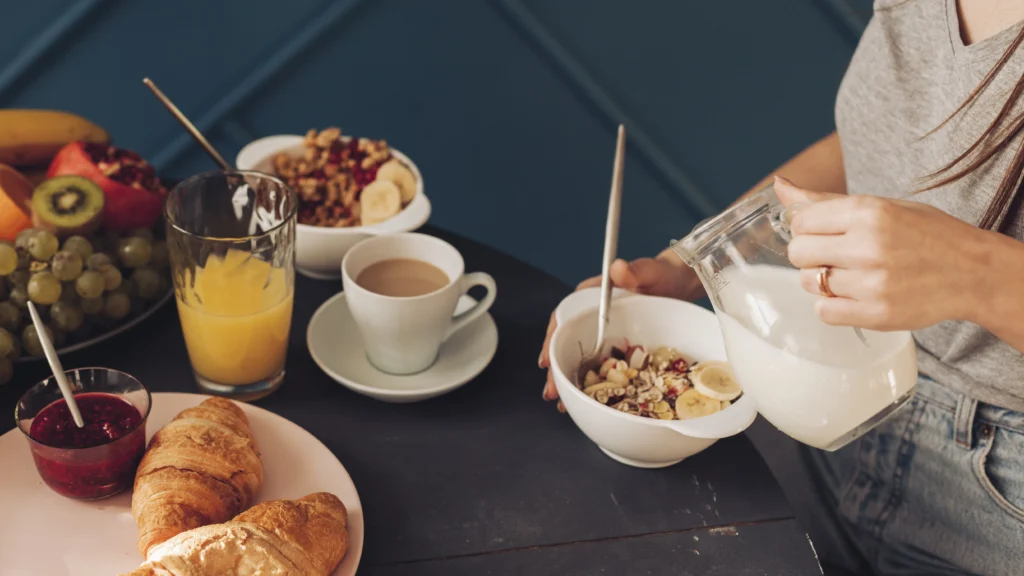
Then brush first!
For many people, eating breakfast with morning breath simply doesn’t feel pleasant.
There’s nothing wrong with making brushing the first part of your morning routine.
In fact, it makes the decision very straightforward:
🛏️ Wake up
🪥 Brush
🥣 Eat breakfast
💧 Have some water
🚪 Start your day
Done.
That’s okay too.
The most important thing is having a routine you can consistently follow.
If brushing afterwards suits you better:
🥣 Eat breakfast
💧 Rinse or drink water
⏰ If you’ve consumed acidic foods or drinks, allow some time before brushing
🪥 Brush thoroughly with fluoride toothpaste
😗 Spit rather than immediately rinsing
Consistency matters.
Both matter.
But brushing last thing at night is particularly important.
At night, saliva flow decreases while you sleep.
Going to bed with plaque and food debris remaining around your teeth isn’t ideal.
Your basic routine should therefore include:
🌙 Brush last thing before bed
and
☀️ Brush on one other occasion each day
For most people, that second occasion is in the morning.
Children also need a consistent twice-daily brushing routine with an age-appropriate amount of fluoride toothpaste.
A practical routine for many families is:
🪥 Brush in the morning
🌙 Brush again last thing at night
Young children need help or supervision with brushing until they have developed the dexterity to clean effectively themselves.
If breakfast includes acidic foods or drinks and you’re planning to brush afterwards, the same principle of avoiding immediate brushing after an acidic exposure is relevant.
Unfortunately, no routine can guarantee you’ll never develop dental decay.
Your risk is influenced by several factors, including:
🪥 Plaque control
🍬 Sugar frequency
🥤 Acid exposure
🧵 Interdental cleaning
💧 Saliva
🦷 Tooth anatomy
👑 Existing restorations
🩺 Certain medical factors and medications
🦷 Individual susceptibility
Brushing effectively is extremely important but it’s one part of a wider preventive routine.
Want to keep things simple?
Here’s a practical approach:
1. Wake up ☀️
2. Brush for around two minutes 🪥
Use fluoride toothpaste and clean all tooth surfaces.
3. Spit don’t immediately rinse 🚫💧
Allow fluoride from the toothpaste to remain around your teeth.
4. Have breakfast 🥣
Enjoy your normal breakfast while being mindful of frequent sugar and acid exposure.
5. Drink some water 💧
Especially after coffee, juice or acidic foods.
6. Get on with your day 😁
No complicated 14-step TikTok dental routine required.
“You should always brush immediately after eating.”
❌ Not necessarily.
Particularly after acidic foods or drinks, it’s sensible not to rush straight into brushing.
“Brushing before breakfast is pointless because you’re about to eat.”
❌ False.
Brushing removes plaque and delivers fluoride. It isn’t simply about removing breakfast crumbs.
“The harder you brush, the cleaner your teeth.”
❌ False.
Effective technique is more important than excessive pressure.
“You should rinse your mouth thoroughly after toothpaste.”
❌ Generally not recommended.
Spitting without immediately rinsing helps retain fluoride from the toothpaste.
“If I brush twice a day, I don’t need to clean between my teeth.”
❌ False.
A toothbrush cannot effectively clean every surface between neighbouring teeth.
“Sugar-free drinks can’t damage teeth.”
❌ Not necessarily.
Some sugar-free drinks are still acidic and may contribute to dental erosion.
Is it better to brush your teeth before or after breakfast?
For many people, brushing before breakfast is a simple option because it removes overnight plaque, delivers fluoride and avoids brushing immediately after acidic breakfast foods or drinks.
How long should I wait to brush after breakfast?
If you’ve consumed acidic foods or drinks, waiting around an hour before brushing is a useful practical rule.
Can I brush immediately after drinking coffee?
You don’t need to brush immediately after coffee. Follow your normal brushing routine and consider drinking water afterwards, particularly if you sip coffee regularly.
Should I brush before or after drinking orange juice?
Brushing before breakfast is an easy option. If you drink orange juice first, avoid brushing immediately afterwards because orange juice is acidic.
Should I brush my teeth before breakfast if I already brushed before bed?
Yes. Plaque continues to accumulate overnight, and morning brushing is one of your recommended twice-daily brushing sessions.
Should I rinse after brushing?
Spit out excess toothpaste rather than immediately rinsing thoroughly with water.
When should I use mouthwash?
If you’re using a fluoride mouthwash, using it at a different time from brushing may help avoid washing away the concentrated fluoride left by toothpaste. Follow the instructions on your product and your dental team’s advice.
Is brushing twice a day enough?
Twice-daily brushing with fluoride toothpaste is fundamental, but you should also clean between your teeth and consider your diet, sugar frequency and overall dental health.
🪥 So… Before or After Breakfast?
If you’ve spent years wondering which camp is right, here’s the simple takeaway:
Brushing before breakfast is an easy and effective option for many people.
If you prefer brushing afterwards, that’s fine too just avoid immediately scrubbing your teeth after an acidic breakfast.
And whichever side of the breakfast debate you’re on, remember the habits that matter most:
✔ Brush twice daily with fluoride toothpaste
✔ Brush for around two minutes
✔ Clean between your teeth
✔ Don’t brush aggressively
✔ Spit rather than immediately rinsing
✔ Be mindful of frequent sugar and acid exposure
✔ Attend dental examinations and hygiene appointments as recommended
Sometimes the best dental advice isn’t complicated.
It’s simply about doing the basics consistently and correctly.
At Centre of Dental Excellence in Stanmore, prevention is at the heart of long-term dental health.
Our team can help you with:
✔ Comprehensive dental examinations
✔ Professional dental hygiene
✔ Personalised brushing advice
✔ Interdental cleaning advice
✔ Gum health
✔ Tooth sensitivity
✔ Dental decay prevention
✔ Dietary advice for oral health
✔ Restorative dentistry where required
Whether you’re unsure about your brushing technique or simply due a dental examination, personalised advice can make everyday oral care much easier.
We welcome patients from:
📍 Stanmore
📍 Harrow
📍 Edgware
📍 Pinner
📍 Bushey
📍 Borehamwood
📍 Northwood
📍 Watford
📍 North West London
📞 Is Your Brushing Routine Actually Working?
Centre of Dental Excellence
46 Church Road
Stanmore, Middlesex
HA7 4AH
📞 020 8420 7407
Book a dental examination or hygiene appointment and discover how small improvements to your everyday routine could help protect your teeth and gums for the long term.