“I brush my teeth twice a day, so why do I still have tartar?”
It is a question dentists and dental hygienists hear regularly.
You might have a good brushing routine, use fluoride toothpaste and still notice hard, rough or yellowish deposits around your teeth, particularly close to the gum line or behind your lower front teeth.
The good news is that having tartar does not necessarily mean you are doing everything wrong.
Brushing twice a day is an important part of keeping your teeth and gums healthy, but brushing cannot remove every trace of plaque from every surface of your mouth. Plaque that remains on the teeth can harden into tartar, also called dental calculus, which cannot simply be brushed away.
Professional cleaning can remove established tartar, while good daily oral hygiene helps reduce the amount of new plaque that builds up afterwards.
At Centre of Dental Excellence in Stanmore, our dental hygiene team can help remove plaque and tartar, assess your gum health and give you personalised advice on improving your home-care routine.
To understand why tartar develops, it helps to understand the difference between plaque and tartar.
Plaque
Plaque is a sticky film containing bacteria that builds up on your teeth.
It can accumulate around:
Regular brushing and cleaning between your teeth helps remove plaque.
The NHS recommends brushing twice a day with fluoride toothpaste and cleaning between your teeth every day using floss or interdental brushes.
Tartar
If plaque is not removed effectively, it can harden and become calculus, commonly called tartar.
Unlike soft plaque, hardened tartar cannot simply be removed by brushing at home.
A dentist or dental hygienist can professionally remove plaque and tartar during a scale and polish or other appropriate hygiene treatment.
There are several possible reasons.
1. Brushing Doesn’t Reach Every Area
Even if you brush twice a day, your toothbrush may not reach every surface equally well.
Common areas where plaque can remain include:
The NHS recommends cleaning between your teeth every day because brushing alone does not clean these areas effectively.
You can therefore have a good twice-daily brushing routine and still develop plaque accumulation in areas your toothbrush misses.
2. You’re Brushing Twice a Day, But Technique Matters Too
Frequency is important, but technique matters as well.
You could brush twice every day but still leave plaque behind if you:
The NHS recommends brushing for about two minutes twice a day, making sure to clean all surfaces of the teeth.
Your dentist or hygienist can also show you areas you may be missing.
3. You’re Not Cleaning Between Your Teeth
This is one of the biggest reasons people can still experience plaque build-up despite brushing regularly.
Your toothbrush cannot effectively clean the contact areas between neighbouring teeth.
Food debris and plaque can accumulate there, particularly if the spaces between your teeth are tight.
Depending on your mouth, a dental professional may recommend:
The NHS recommends cleaning between your teeth every day using floss or interdental brushes.
4. Some Areas Naturally Build Up Tartar More Easily
You may notice tartar appearing particularly quickly behind your lower front teeth.
This area is close to the openings of salivary glands, and some people naturally experience more mineralised deposits in particular areas.
This doesn’t mean you are not brushing properly.
Your individual saliva, tooth position, oral anatomy and cleaning habits can all influence where deposits accumulate.
5. Crowded or Overlapping Teeth Can Be Harder to Clean
If your teeth are crowded, rotated or overlap each other, some surfaces can be much more difficult to access.
Your toothbrush may not reach every area effectively, and standard floss may not always be the easiest option.
This can allow plaque to remain in areas that are difficult to see.
Your hygienist can identify these areas and help you find a cleaning technique or interdental aid that works for your particular mouth.
6. Dental Work Can Create Plaque-Trapping Areas
Fillings, crowns, bridges, implants and orthodontic appliances can create additional areas that require careful cleaning.
Plaque can collect around:
This doesn’t mean dental work is causing tartar.
It simply means that some areas may require more precise cleaning to keep plaque under control.
7. You May Have Tartar That Has Already Hardened
This is perhaps the most important point.
If the deposit on your tooth is already hardened calculus, brushing harder will not make it disappear.
In fact, brushing more aggressively is not the solution.
Once plaque has mineralised into calculus, professional dental cleaning may be required to remove it. NHS dental guidance describes scale and polish as professional cleaning by a hygienist that removes plaque and tartar from the teeth.

Established tartar should not be scraped off at home.
You may see online tools or videos showing people attempting to scrape deposits from their own teeth.
This is not something we recommend.
Trying to remove tartar yourself with sharp or unsuitable instruments could injure your gums or damage the surfaces of your teeth.
If you have a hard deposit that will not come away with normal brushing, a dental hygienist can assess it and remove it professionally where appropriate.
Tartar can contribute to gum problems because it provides a rough surface where plaque can accumulate.
Gum disease is associated with plaque build-up around the teeth and gum line.
Early gum disease can cause:
The NHS recommends seeing a dentist if your gums bleed when you brush or eat, or if they are painful or swollen.
If gum disease progresses, it can affect the structures supporting the teeth and potentially lead to loose teeth.
This is why managing plaque and tartar is about more than simply making your teeth look cleaner.
If you have tartar around the gum line, your gums may become irritated and inflamed.
You might notice blood when:
Bleeding gums are not something you should simply accept as normal.
The NHS identifies bleeding, red, swollen or sore gums as symptoms of gum disease and recommends getting them checked.
A dental examination can determine whether the bleeding is related to gum inflammation or another problem.

Yes.
One of the main purposes of a professional hygiene appointment is to remove plaque and tartar that cannot be effectively removed through normal home cleaning.
A scale and polish involves professional cleaning of the teeth to remove accumulated plaque and tartar.
But a hygiene appointment isn’t only about removing what is already there.
A good hygiene appointment can also help you understand:
No.
Professional hygiene treatment and daily home care work together.
A hygienist can remove established deposits, but plaque will begin to build up again as part of normal daily life.
That means continuing to:
🪥 Brush twice a day with fluoride toothpaste
🦷 Clean between your teeth every day
🥤 Be mindful of sugary foods and drinks
🚭 Avoid smoking
👩⚕️ Attend dental check-ups as recommended
The NHS recommends brushing twice daily and cleaning between the teeth every day as part of maintaining healthy teeth and gums.
There is no single hygiene schedule that is right for everyone.
Your recommended frequency can depend on factors such as:
Your dentist or hygienist can recommend an interval based on your individual needs.
Similarly, routine dental check-ups are not necessarily required every six months for every person. The NHS says the interval can range from around three months to two years depending on oral health and future risk.
If your teeth still feel rough or coated after brushing, there are several possibilities.
You may have:
A dental hygienist can assess the deposits and help identify where your home-care routine could be improved.
A professional hygiene appointment can help remove some extrinsic surface staining, depending on its type and cause.
Staining can be associated with things such as:
However, not every form of tooth discolouration is surface staining.
If the colour change is within the tooth itself, a hygiene appointment may not be enough to change it.
Your dentist can help determine whether the issue is surface staining or another form of tooth discolouration.
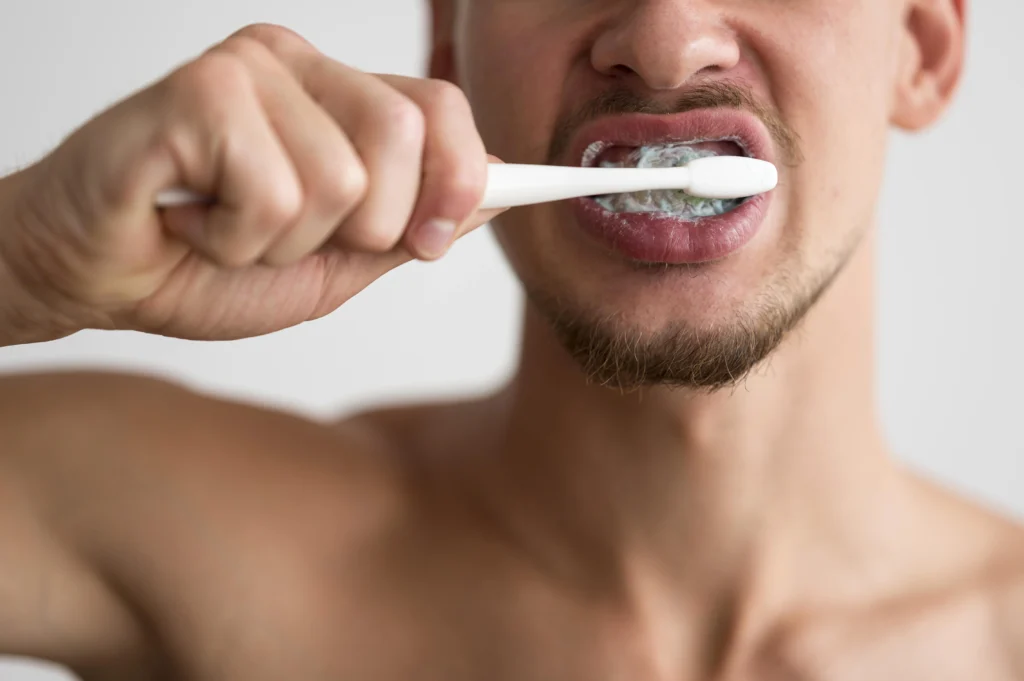
An electric toothbrush can be a useful tool for some people, particularly if it helps them clean thoroughly and consistently.
However, the type of toothbrush is only one part of your oral hygiene routine.
The NHS states that both manual and electric toothbrushes can be effective when used correctly; thoroughly cleaning all tooth surfaces is more important than simply choosing one type over another.
An electric toothbrush also cannot remove established tartar once it has hardened.
You cannot always prevent every deposit from forming, but you can reduce plaque accumulation.
Try to:
1. Brush twice a day
Brush for around two minutes using fluoride toothpaste.
2. Clean between your teeth every day
Use floss or interdental brushes as appropriate for your mouth.
3. Pay attention to the gum line
Plaque often accumulates where the teeth meet the gums.
4. Don’t simply brush harder
More pressure does not necessarily mean cleaner teeth.
5. Have regular dental check-ups
Your dentist can monitor your teeth and gums and identify problems early.
6. See a dental hygienist when recommended
Professional cleaning can remove established plaque and tartar that cannot be removed effectively at home.
New to Centre of Dental Excellence? Your First Hygiene Appointment Is £80
If you are brushing twice a day but still noticing tartar, stained areas, bleeding gums or a rough build-up around your teeth, a professional hygiene appointment could be a useful next step.
At Centre of Dental Excellence in Stanmore, we offer a new-patient hygiene appointment for £80.
🦷 New Patient Hygiene Offer
30-minute dental hygiene appointment £80
During your appointment, your dental hygienist can professionally clean your teeth and help you understand how to improve your daily oral hygiene routine.
This is a new-patient offer for patients who are new to Centre of Dental Excellence.
📍 46 Church Road, Stanmore, Middlesex HA7 4AH
Serving patients from:
If you brush twice a day and still have tartar, don’t assume that you are doing something wrong.
Brushing is essential for removing plaque, but it cannot always reach every surface of every tooth. Once plaque hardens into calculus, it cannot simply be brushed away.
The most effective approach is a combination of:
Good daily home care + cleaning between your teeth + regular dental assessments + professional hygiene care when appropriate.
If you have noticed tartar, bleeding gums, bad breath or teeth that feel rough despite brushing, it may be time to have your teeth and gums assessed.
🦷 New Patient Hygiene Appointment £80
30 minutes | £80 for new patients
📍 Centre of Dental Excellence
46 Church Road
Stanmore, Middlesex HA7 4AH
📞 020 8420 7407
Looking for a dental hygienist in Stanmore, Harrow, Edgware, Bushey, Pinner, Borehamwood, Northwood or Watford? Book your new-patient hygiene appointment at Centre of Dental Excellence.
Why do I have tartar even though I brush twice a day?
Brushing twice a day helps remove plaque, but it may not reach every area of your mouth. Plaque that remains can harden into tartar, which cannot be removed simply by brushing.
Can brushing remove tartar?
No. Brushing can help prevent and reduce plaque build-up, but established tartar is hardened and generally requires professional removal by a dental professional.
Can a dental hygienist remove tartar?
Yes. Professional hygiene treatment can remove plaque and tartar that has built up on the teeth.
Why do I keep getting tartar on my bottom front teeth?
The lower front teeth can be a common area for mineralised deposits to accumulate. Your individual saliva, tooth position and cleaning routine can all influence tartar build-up.
Does tartar cause bad breath?
Tartar can contribute to plaque accumulation and gum inflammation, both of which can be associated with bad breath. Persistent bad breath should be discussed with a dentist or hygienist.
Does tartar cause bleeding gums?
Tartar and plaque accumulation around the gum line can contribute to gum inflammation. Bleeding gums can be a sign of gum disease and should be assessed rather than ignored.
How often should I see a dental hygienist?
It depends on your individual oral-health needs. Your dentist or hygienist can recommend an appropriate interval based on your gum health, plaque and tartar accumulation and other risk factors.
How much is the new-patient hygiene appointment at Centre of Dental Excellence?
The current new-patient offer is £80 for a 30-minute dental hygiene appointment at Centre of Dental Excellence in Stanmore.